


 Share
Share
Organised vs Informal Recycling: Impact, Risks & Sustainability
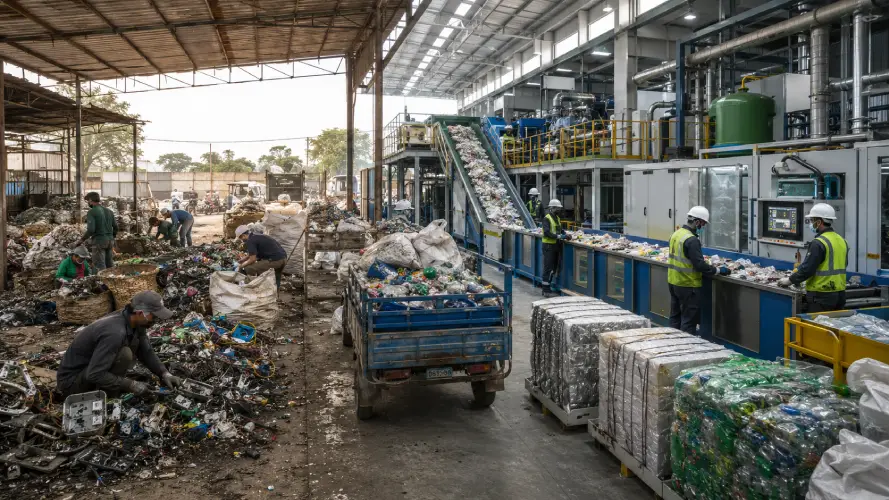
Recycling happens everywhere, but how it happens matters enormously. Two broad recycling systems operate globally: organized, formal recycling through licensed companies with proper infrastructure and environmental controls, versus informal recycling through unregulated operators working in hazardous conditions. The choice between these systems profoundly impacts environmental protection, worker safety, material recovery efficiency, and circular economy development. In many developed countries, formal recycling systems dominate, although informal recycling activities may still exist in certain sectors. In developing countries like India, informal recycling persists despite growing formal infrastructure. Understanding the critical differences between organized and informal recycling is essential for environmental officers, procurement professionals, policymakers, and anyone committed to sustainable operations and environmental responsibility.
What is Informal Recycling?
Informal recycling refers to unregulated waste collection, sorting, and processing operated by independent workers or small unregistered operators working outside formal systems. In developing countries like India, informal recyclers (often called ragpickers or scrap workers) manually sort waste, collect valuable materials, and sell them to dealers or processors. Work occurs in open-air environments without safety equipment, environmental controls, or worker protections.
Informal recycling systems recover significant material volumes. Informal recyclers play a significant role in collecting and recovering recyclable materials in many developing countries, including India.. However, this economic activity occurs under dangerous conditions with minimal environmental protection. Workers handle hazardous materials including heavy metals, acids, toxic plastics, and electronic waste without protective equipment. Limited regulatory oversight, inadequate safety measures and insufficient environmental controls often characterize informal recycling operations.
What is Organised Recycling?
Organised recycling refers to formal, licensed recycling operations run by registered companies following regulatory requirements, safety standards, and environmental protocols. Organised recyclers invest in proper infrastructure (sorting equipment, processing facilities, environmental controls), employ trained workers with safety equipment, maintain quality management systems, and comply with environmental and labor regulations. These operations process waste systematically with documented procedures, quality assurance, and environmental monitoring.
Organised recycling represents institutional infrastructure for material recovery. Companies like Gravita India exemplify this model - licensed operations with modern facilities, professional workers, environmental compliance, and quality certifications. The investment required for organised recycling is substantial, but the result is efficient, safe, environmentally responsible material recovery that can scale sustainably.
Worker Safety: The Critical Difference
Worker safety represents the most stark difference between informal and organised recycling. Informal recyclers face severe occupational hazards without protection or compensation systems. Manual waste sorting exposes workers to sharp objects, hazardous chemicals, toxic substances, and infectious materials. E-waste recycling in informal settings exposes workers to lead, mercury, cadmium, and other heavy metals causing permanent health damage. Acid exposure from batteries burns skin and eyes. Workers lack medical care if injured.
Formal recycling provides comprehensive worker protections. Workers wear protective equipment (helmets, gloves, respirators, body protection). Facilities have engineering controls - ventilation systems, containment areas, proper storage for hazardous materials. Occupational health monitoring and workplace safety programs are typically implemented in formal recycling facilities. Workers are generally provided with formal employment, appropriate safety training and workplace protections in accordance with applicable regulations. Safety training is mandatory. Regular health screenings monitor exposure to hazardous substances. The contrast is profound - formal workers operate in controlled environments with comprehensive protections, while informal workers face constant health risks.
Environmental Impact Comparison
Hazardous Material Handling: Informal: Hazardous substances (battery acid, electronic waste toxins, heavy metals) are handled without containment or protective measures, contaminating soil and water. Formal: Hazardous materials are contained, processed, and disposed of according to environmental standards, preventing contamination.
Air Quality: Informal: Open-air burning to extract valuable metals from electronic waste releases toxic fumes and particulates affecting workers and surrounding communities. Formal: Controlled processes with air pollution control systems minimize emissions and comply with environmental regulations.
Water Contamination: Informal: Untreated waste water, acid from batteries, and leachate from waste piles contaminate groundwater and surface water affecting communities. Formal: Wastewater treatment systems help minimize environmental impacts and ensure compliance with applicable discharge standards.
Land Contamination: Informal: Waste disposal on land without containment allows soil contamination affecting agricultural land and communities. Formal: Proper waste handling and engineered disposal systems significantly reduce the risk of soil contamination.
Material Recovery Efficiency: Informal: Manual, inefficient processing achieves lower material recovery Significant material remains in waste streams. Formal: Advanced equipment and processes achieve significantly higher recovery efficiency of valuable materials, minimizing waste.
Downstream Environmental Impact: Informal: Contaminated or poorly processed materials may cause problems in downstream manufacturing. Formal: Quality-controlled materials meet specifications for safe use in manufacturing.
Economic Impacts
Informal recycling creates economic opportunity for workers in developing countries where formal employment is scarce. Workers can earn immediate income from collected materials without formal employment barriers. This economic activity is substantial - India's informal recycling sector significant economic value while providing livelihoods for a large number of workers.
However, informal recycling creates structural economic disadvantages. Workers earn minimal compensation despite handling hazardous materials. Dealers and middlemen capture most economic value, leaving workers with subsistence income. No long-term income security, no benefits, no retirement savings. Many workers have limited opportunities for long-term income security and career advancement. Formal recycling creates better economic outcomes - workers earn higher wages, receive benefits, have employment security, and opportunities for career advancement.
For society, informal recycling creates hidden economic costs. Healthcare costs treating illnesses and injuries from hazardous material exposure burden public systems. Environmental cleanup costs for contaminated sites exceed any economic benefit from informal recycling. Proper formal systems cost more upfront but create far better economic outcomes over time - sustainable jobs with dignity, tax revenue to support services, and eliminated environmental cleanup liabilities.
Regulatory Framework and Compliance
Formal recycling operates within regulatory frameworks requiring proper licensing, environmental impact assessments, worker safety compliance, and regular inspections. Companies must meet hazardous waste handling standards, maintain documentation, and implement environmental management systems. Extended Producer Responsibility (EPR) schemes increasingly require formal, documented recycling of products. Regulatory compliance ensures accountability and environmental protection.
Certain informal recycling practices, particularly involving hazardous waste, may not comply with applicable environmental regulations. Without regulation, hazardous practices continue unchecked. However, regulatory evolution is improving. India's Waste Management Rules, Battery Waste Management Rules, and E-Waste Management Rules increasingly mandate formal, certified operations, creating legal opportunity for formal sector growth and informal sector integration.
Scale and Material Recovery Capacity
Informal recycling operates at small scale - individual ragpickers, small collection groups, informal dealers. This fragmented structure means inefficient collection, inconsistent material quality, and minimal leverage for technology investment or process improvement. Despite handling substantial material volumes nationally, individual operations remain tiny and unsophisticated.
Formal recycling operates at institutional scale with significant material processing capacity. Large facilities equipped with advanced equipment process thousands of tons annually. Professional recycling companies in India create systematic collection networks, standardized processing, and quality-assured outputs. Scale enables technology investment, process optimization, and efficiency improvements impossible at informal scale.
Technology and Innovation
Formal recycling drives continuous technology improvement. Investment in advanced sorting equipment, automated processing, and quality control systems increases efficiency and material recovery rates. Advanced recycling technologies, including mechanical and chemical recycling where appropriate are only possible through formal sector investment. Technology adoption occurs faster in formal operations than informal alternatives.
Informal recycling is technology-limited. Manual processes dominate, with minimal technology adoption. Innovation investment is impossible without capital and regulatory certainty. E-waste recycling technology particularly shows the gap - formal facilities use sophisticated equipment for material separation and recovery, while informal operations use crude methods causing environmental and health consequences.
Integration Path: From Informal to Formal
Practical transition strategies integrate informal workers into formal systems rather than simply eliminating informal recycling. Models in India and globally show how informal recyclers can be formalized through cooperative structures, skills training, and employment in formal facilities.
Cooperatives enable informal recyclers to aggregate collection volumes, enabling contracts with formal processors. Gravita India and similar operations can contract directly with recycler cooperatives, providing stable material supply and worker income security. Skills training transitions informal workers to formal employment in recycling facilities. Government support programs can subsidize transition costs and initial employment.
This transition benefits everyone. Informal workers gain safer conditions, better compensation, and employment security. Communities benefit from environmental protection. Formal sector expands material supply and market reach. Environmental outcomes dramatically improve as sophisticated recycling replaces crude informal processes. The transition is ongoing in India but requires continued investment in formal infrastructure and worker support programs.
Circular Economy Connection
True circular economy requires formal, efficient recycling systems. Urban mining and material recovery operations depend on systematic material collection and professional processing. Closed loop manufacturing requires reliable, quality-assured recovered material supply. Advanced recycling technologies (mechanical and chemical) require formal infrastructure and investment. Informal recycling alone cannot fully support an efficient circular economy because material recovery, traceability, and environmental performance remain inconsistent.
Frequently Asked Questions
Why does informal recycling persist if it's so problematic?
Informal recycling persists because developing formal recycling infrastructure requires substantial long-term investment. In poor communities, informal recycling provides immediate survival income. Until formal systems scale sufficiently to absorb workers and material volumes, informal recycling will continue, particularly in developing countries.
Are informal recyclers doing harm intentionally?
Most informal recyclers are economically disadvantaged workers seeking survival income. They often lack awareness of health and environmental consequences of their practices. The problem is systemic - lack of regulation, lack of investment in formal alternatives, lack of worker protections - rather than individual malice.
Should formal recycling completely replace informal?
The realistic path is integration rather than elimination. Formal systems need to absorb informal workers through employment and cooperative structures. This provides better outcomes than either pure informal systems or forced elimination leaving workers without income.
How quickly can formal recycling infrastructure scale in India?
With adequate investment and policy support, formal recycling can scale significantly over time with continued investment, policy support, and industry participation. Already, formal e-waste recycling capacity is expanding rapidly. However, scaling requires continuous investment and worker training programs.
What role does EPR play in this transition?
EPR schemes legally require manufacturers to manage end-of-life products through formal, tracked systems, creating market demand for formal recycling. EPR implementation accelerates formal sector growth and encourages greater participation in formal recycling systems.
Key Takeaways
Organised and informal recycling represent starkly different approaches to waste management with profound implications for worker safety, environmental protection, material recovery efficiency, and sustainable development. Informal recycling provides critical economic opportunity for poor communities but at the cost of worker health, environmental contamination, and inefficient resource recovery. Organised recycling requires substantial capital investment and regulatory frameworks but delivers safe working conditions, environmental protection, efficient material recovery, and sustainable economic opportunity. For companies committed to sustainable operations and environmental responsibility, sourcing materials from formal recycling operations is non-negotiable - formal recycling provides quality assurance, environmental certification, and ethical sourcing confidence impossible with informal alternatives. For governments and policymakers, prioritizing formal sector development through investment, regulation, and worker transition programs represents the path forward. For India specifically, transitioning from informal-dominated recycling toward formal, professional systems like those operated by Gravita India represents environmental imperative and economic opportunity - creating safer jobs, protecting environment, enabling circular economy, and building sustainable competitive advantage in global manufacturing. The transition from informal to organised recycling is ongoing but essential for truly sustainable resource management and circular economy.
As one of India's leading recycling companies, Gravita India supports the transition toward organised recycling through environmentally responsible operations, advanced processing technologies, quality management systems and structured collection networks that contribute to a stronger circular economy.