


 Share
Share
What is Closed Loop Manufacturing? Building a Circular Economy in Production
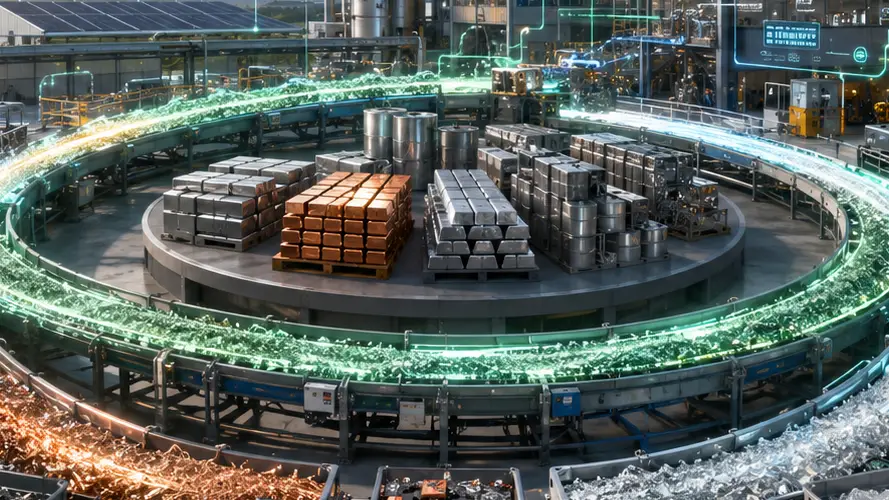
Closed loop manufacturing sounds complex, but the concept is simple: design products and processes to minimize waste and maximize resource recovery. Instead of the traditional linear model where raw materials become products that end up in landfills, closed loop manufacturing creates a system where products are designed for recovery, remanufacturing, and reuse. From smartphones to automobile parts to construction materials, companies worldwide are discovering that closing the loop is both environmentally responsible and economically profitable.
What Exactly is Closed Loop Manufacturing?
Closed loop manufacturing is a production system designed to eliminate waste by recovering and reusing materials and components at the end of a product's life. Unlike traditional linear manufacturing (extract → produce → dispose), closed loop manufacturing creates a circular flow: design → produce → use → collect → recover → redesign → produce again.
The system integrates sustainability directly into product design and production processes. Materials are selected for recyclability and durability. Products are engineered for disassembly. Collection systems are established to retrieve used products. Processing facilities recover valuable materials. Recovered materials become inputs for new production, creating a self-sustaining cycle that minimizes waste and reduces reliance on virgin raw materials.
This approach transforms waste from a liability into an asset. Instead of discarding used products, closed loop systems treat them as valuable resources. Plastics become new plastic products. Metals are refined and cast into new components. Glass is cleaned and remanufactured. The economic benefit is compelling: recovered materials often reduce lifecycle costs while improving resource efficiency.
How Does Closed Loop Manufacturing Work?
1. Design for Disassembly: Products are engineered from inception with end-of-life recovery in mind. Designers specify materials that are recyclable or biodegradable. Components are assembled using reversible fasteners and connections, making disassembly straightforward. Labels and documentation show material composition and disassembly procedures. This design philosophy contrasts sharply with traditional manufacturing where end-of-life recovery was rarely considered.
2. Production with Recovery in Mind: Manufacturing processes are optimized to generate minimal waste. Production techniques are chosen to allow material recovery. Offcuts and scraps are collected systematically rather than discarded. Workers understand their role in the circular system. Quality control ensures products meet durability standards so they last longer in use, delaying recovery and extending value.
3. Extended Product Life: Products are manufactured to last. Durability standards are high. Repair services and replacement parts are available, extending functional life. This reduces the frequency at which products enter recovery systems. A smartphone designed to last five years instead of three significantly reduces material recovery demands and extends the time before virgin material extraction becomes necessary.
4. Product Collection Systems: Structured collection systems ensure products are returned for recovery rather than disposed in landfills. Manufacturers establish take-back programs. Extended Producer Responsibility (EPR) schemes require producers to manage end-of-life products. Retail partnerships facilitate easy return. Geographic distribution of collection points makes participation convenient for consumers.
5. Sorting and Processing: Recovered products are systematically sorted by material type and condition. Some products are refurbished and resold as second-hand items. Components that are still functional are harvested and reused. Materials that cannot be reused are sorted for material recovery processing. This multi-tiered approach maximizes value extraction from each recovered product.
6. Material Recovery: Products undergo material recovery through mechanical and chemical processes, similar to urban mining operations. Metals are separated, melted, and refined. Plastics are sorted by resin type and reprocessed. Glass is cleaned and remanufactured. The recovered materials are purified to meet industry standards for use in new manufacturing. Quality and consistency are critical-recovered materials are processed to meet the specifications required for their intended applications.
7. Reintroduction to Manufacturing: Recovered materials are sold to manufacturers as inputs for new production. Automotive manufacturers use recovered steel and aluminum. Electronics manufacturers incorporate recycled plastics and metals. Construction companies use recovered building materials. This final step completes the loop-materials that were once destined for landfills are now valuable manufacturing inputs, reducing the need for virgin material extraction.
Environmental and Economic Benefits
Environmental Benefits:
· Dramatically Reduced Waste: The fundamental goal of closed loop manufacturing is to eliminate waste. Materials that would traditionally be discarded are recovered and reused, substantially reducing landfill burden.
· Lower Resource Extraction: By closing loops and reusing materials, dependency on virgin material extraction decreases. Mining, logging, and fossil fuel extraction diminish as recovered materials substitute virgin sources.
· Reduced Energy Consumption: Manufacturing from recovered materials requires significantly less energy than processing virgin materials. Aluminum recycling uses 95% less energy than virgin aluminum production.
· Lower Carbon Emissions: Reduced energy consumption and extraction pressure directly translate to lower greenhouse gas emissions. Closed loop manufacturing substantially reduces manufacturing carbon footprint.
· Water Conservation: Virgin material extraction is water-intensive. Closed loop manufacturing conserves water by reducing extraction demands.
· Habitat Protection: Reducing extraction pressure protects natural habitats and ecosystems from mining, logging, and drilling operations.
Economic Benefits:
· Cost Reduction: Recovered materials often cost less than virgin materials, reducing production costs and improving profit margins.
· Supply Security: Manufacturing depends on material supply chains. Closed loops provide locally-sourced, controlled material supplies independent of global commodity markets and geopolitical disruptions.
· New Business Models: Product recovery, refurbishment, and remanufacturing create new revenue streams and business opportunities.
· Regulatory Compliance: Extended Producer Responsibility schemes and circular economy regulations increasingly mandate closed loop approaches. Early adopters gain competitive advantage.
· Brand Value: Consumers increasingly prefer sustainable products. Closed loop manufacturing enables authentic sustainability claims, improving brand reputation and customer loyalty.
· Market Differentiation: Companies leading in closed loop manufacturing differentiate themselves from competitors and attract environmentally conscious customers.
Closed Loop Manufacturing and the Circular Economy
Closed loop manufacturing is the operational foundation of the circular economy. Where the circular economy is a conceptual framework emphasizing circular material flows, closed loop manufacturing is how circular economy principles become practical reality in production systems.
The circular economy envisions eliminating the concept of waste entirely. Closed loop manufacturing makes this vision possible by designing waste out of production at the source. Rather than treating waste as inevitable, closed loop systems prevent waste generation in the first place. This represents a fundamental shift from end-of-pipe waste management (treating waste after it's generated) to systemic design that prevents waste from occurring.
Closed loop manufacturing also connects to the broader urban mining movement, which systematically recovers valuable materials from waste streams. While urban mining primarily focuses on recovering materials from existing waste, closed loop manufacturing prevents waste from occurring in the first place by designing recovery into production systems. Together, these approaches create comprehensive material recovery strategies that maximize resource efficiency.
Industries Adopting Closed Loop Manufacturing
Automotive Industry: Vehicle manufacturers increasingly design cars for disassembly and material recovery. End-of-life vehicles are systematically processed to recover steel, aluminum, copper, and other materials. Some manufacturers offer take-back programs encouraging consumers to return vehicles for proper recovery.
Electronics Manufacturing: The rapid obsolescence of electronics makes closed loop manufacturing critical. Manufacturers design smartphones, computers, and appliances for component recovery and material reuse. Take-back programs collect used electronics for refurbishment, component harvesting, and material recovery.
Textile Industry: Textile manufacturers are closing loops by designing garments for disassembly, using mono-materials where possible, and establishing collection systems for worn clothing. Recovered fibers are reprocessed into new textiles, creating true circular fashion systems.
Packaging Industry: Beverage bottles, food packaging, and shipping containers increasingly incorporate recovered materials. Closed loop systems for packaging aim to achieve 100% reuse or material recovery rather than single-use disposal.
Battery Manufacturing: As battery demand explodes with electric vehicle adoption, closed loop battery manufacturing becomes essential. Manufacturers design batteries for disassembly and material recovery. Used batteries are systematically recovered to extract valuable metals like lithium, cobalt, and nickel for new battery production.
Gravita India: Enabling Closed Loop Manufacturing
Gravita India represents how formal, professional urban mining operations enable closed loop manufacturing by systematically recovering valuable materials from end-of-life products and waste streams. The company specializes in processing materials through advanced mechanical and chemical techniques, ensuring recovered materials meet industry specifications for remanufacturing.
For manufacturers implementing closed loop systems, Gravita provides the critical material recovery component. Gravita also provides integrated recycling solutions and turnkey recycling projects for setting up battery recycling plants and advanced material recovery facilities. As India's leading battery recycling and material recovery company, Gravita ensures that recovered materials are processed to the highest standards, enabling manufacturers to confidently use recovered materials as manufacturing inputs.
This partnership is essential for closed loop systems to function. Manufacturers design products for recovery; Gravita processes and recovers materials; manufacturers use recovered materials in new production. Together, they create truly circular production systems where waste is eliminated and materials flow continuously through production cycles.
Challenges in Closed Loop Manufacturing
· Design Complexity: Designing products for both performance and recovery requires sophisticated engineering and adds complexity.
· Initial Investment: Establishing collection systems and recovery infrastructure requires significant upfront capital investment.
· Material Quality Variability: Recovered materials may vary in composition and quality, requiring quality control systems and production flexibility.
· Market Economics: If virgin material prices are very low, recovered materials may become less cost-competitive, though this often changes when full lifecycle costs are considered.
· Consumer Participation: Closed loops depend on consumers returning products for recovery. Low return rates reduce material supply.
· Contamination: If collection and sorting systems are ineffective, material contamination can reduce recovery value.
· Regulatory Uncertainty: Circular economy regulations vary by country, creating compliance complexity for global manufacturers.
The Future of Closed Loop Manufacturing
Closed loop manufacturing is transitioning from a niche sustainability practice to mainstream manufacturing strategy. Several trends accelerate this transition:
· Regulatory Mandates: Extended Producer Responsibility schemes and circular economy regulations increasingly mandate closed loop approaches.
· Technology Advancement: AI-powered sorting, advanced chemical processing, and digital tracking technologies improve material recovery efficiency and profitability.
· Consumer Demand: Growing consumer preference for sustainable products creates market incentive for closed loop approaches.
· Supply Chain Risk: As supply chains become more complex and geopolitically uncertain, locally-controlled closed loops provide supply security.
· Cost Competitiveness: As virgin material costs rise and recovery technology improves, recovered materials become increasingly cost-competitive.
· Digital Innovation: Digital product passports, blockchain tracking, and IoT sensors enable detailed tracking of material flows and product lifecycles.
· Investor Pressure: Environmental, Social, and Governance (ESG) investing pressure pushes companies toward circular business models.
Frequently Asked Questions
What's the difference between closed loop manufacturing and recycling?
Recycling is one component of closed loop manufacturing. Closed loop manufacturing is a comprehensive system designed at the product design stage to minimize waste and enable material recovery. Recycling occurs downstream after waste is generated. Closed loop manufacturing prevents waste from occurring in the first place.
Why is closed loop manufacturing important?
Closed loop manufacturing addresses two critical challenges: environmental sustainability (reducing waste and extraction pressure) and economic efficiency (reducing material costs and supply chain risks). As virgin material costs rise and environmental regulations tighten, closed loop manufacturing becomes increasingly essential.
How do manufacturers know recovered materials meet quality standards?
Professional material recovery operations conduct rigorous testing before selling recovered materials. Testing includes purity analysis, mechanical property testing, contamination detection, and material composition certification. Only materials meeting industry specifications are sold to manufacturers.
Are products from recovered materials as good as those from virgin materials?
Yes. When properly recovered and processed, recycled materials meet or exceed virgin material specifications. Many manufacturers cannot distinguish between products made from virgin versus properly recovered materials.
How do companies ensure products are returned for recovery?
Extended Producer Responsibility (EPR) schemes make manufacturers responsible for end-of-life product management. Companies establish take-back programs, partner with retailers for collection, offer incentives for returns, and invest in collection infrastructure to ensure high recovery rates.
Key Takeaways
Closed loop manufacturing represents a fundamental shift in how industries think about production and waste. Rather than accepting waste as inevitable, closed loop systems prevent waste by designing recovery into production at the source. Environmental responsibility and economic profitability align-reducing waste reduces costs while benefiting the planet. Closed loop manufacturing is no longer a niche sustainability practice-it's becoming mainstream strategy as regulations mandate circular approaches, virgin material costs rise, and consumer demand for sustainability increases. The shift from linear to circular manufacturing is accelerating globally, with India emerging as a leader through formal operations like Gravita that enable closed loop systems through professional material recovery. For manufacturers, embracing closed loop principles means competitive advantage in sustainability, cost reduction, supply chain resilience, and brand value. For society, it means progress toward circular economies where waste is eliminated and resources flow continuously through production cycles, creating prosperity without planetary harm.