


 Share
Share
What is Urban Mining? How Recycling is Extracting Wealth from Waste
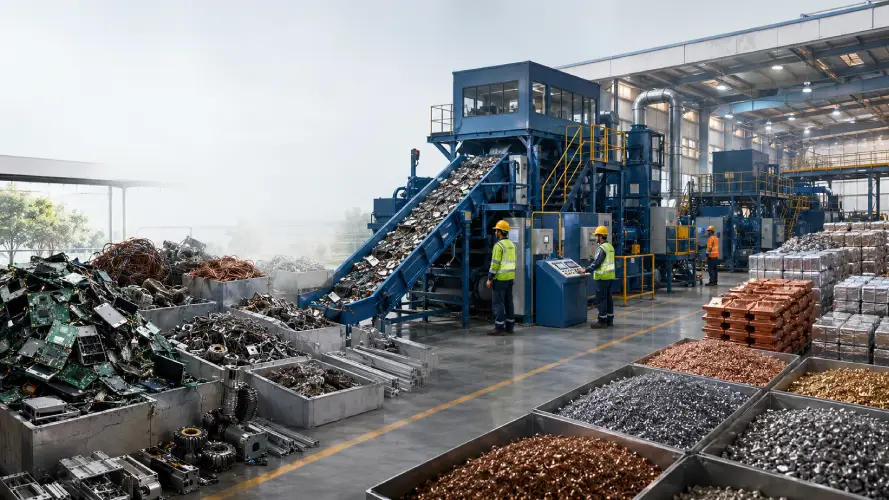
Urban mining might sound futuristic, but it's happening right now across India and the world. Instead of extracting raw materials from the earth, urban mining recovers valuable resources from our waste streams. From discarded electronics to construction debris, urban miners are discovering that one person's waste is another industry's wealth.
What Exactly is Urban Mining?
Urban mining-also called urban ore mining or waste mining-is the process of recovering reusable materials and valuable elements from end-of-life products and waste found in urban environments. Electronic devices contain valuable quantities of gold, silver, copper and other metals, often at concentrations that make recovery economically viable.
Every discarded building contains steel and aluminum. Every old battery contains lead and cobalt.
Unlike traditional mining that extracts raw materials by processing large quantities of low-grade ore, urban mining targets concentrated sources of valuable materials already present in cities. The concept was introduced by Professor Hideo Nanjyo in the late 1980s. It gained wider global recognition during the 2000s as researchers realized recycling waste streams could supply as much (or more) of certain materials as traditional mining, with significantly lower environmental impact.
Where Does Urban Mining Happen?
Electronic Waste (E-Waste) Processing: Every smartphone, computer, and electronic device contains precious metals. Processing e-waste to recover these materials represents one of the largest urban mining opportunities globally.
Construction and Demolition Sites: Building demolition generates massive quantities of materials-steel, copper, aluminum, and concrete-ready for recovery instead of landfill disposal.
End-of-Life Vehicle Processing: Automobiles contain aluminum, steel, copper, and platinum-group metals. Systematic recovery from auto recycling provides valuable materials.
Battery Recycling: Battery recycling recovers valuable materials from lead-acid and lithium-ion batteries, supporting resource conservation and reducing hazardous waste.
The Urban Mining Process
A typical urban mining workflow may include the following stage:.
1. Collection and Transportation: The journey begins with systematic collection of end-of-life products and materials from various sources. Unlike random scavenging, formal urban mining operations have established collection networks-either working with consumers directly, partnering with waste management companies, or collecting from designated drop-off centers. For electronics, this might mean working with retailers or manufacturers under Extended Producer Responsibility (EPR) schemes. For construction materials, it involves working with demolition contractors and developers. Professional collection ensures material quality and enables proper tracking and documentation-critical for regulatory compliance and material traceability.
2. Sorting and Categorization: Raw incoming material is first separated by broad categories: electronics, batteries, construction materials, ferrous metals, non-ferrous metals, plastics, glass, and other recyclables. This stage often uses both manual labor (for delicate or complex items that need careful handling) and mechanical systems (for high-volume sorting of standard materials). Modern facilities increasingly employ optical scanners and AI-powered sorting systems to improve accuracy and recovery rates. Proper sorting at this stage is essential because it determines the efficiency of all subsequent processing steps.
3. Dismantling and Disassembly: For complex products like electronics or vehicles, materials are systematically disassembled into component parts. This might involve removing circuit boards from electronics, extracting batteries from devices, separating metal frames from plastic housing, or removing copper wiring from structural materials. Trained technicians work carefully to separate different material types and ensure hazardous components (like batteries, capacitors, or mercury-containing switches) are carefully isolated for special handling. This step requires skill and attention to detail to maximize material recovery and ensure worker safety.
4. Mechanical Processing: Depending on the material type, mechanical processing employs various techniques. Shredding breaks large items into smaller, more manageable pieces. Grinding reduces materials to finer particles suitable for further processing. Magnetic separation uses electromagnets to separate ferrous metals (iron and steel) from other materials. Eddy current separation recovers non-ferrous metals like aluminum, copper, and brass using electromagnetic induction. Density separation uses differences in material density to separate components of different weights. These mechanical processes are energy-efficient compared to chemical processing and work effectively for many common recyclable materials.
5. Chemical and Advanced Processing: For more complex recovery-particularly for valuable elements like gold, copper, rare earth materials or battery metals-advanced chemical processing may be necessary. Hydrometallurgical processes use aqueous solutions to dissolve and separate valuable metals. Pyrometallurgical processes use controlled heat to melt and separate materials. These advanced techniques allow recovery of materials that mechanical processing alone cannot extract. However, only licensed, regulated facilities should perform chemical processing to ensure environmental safety and worker protection.
6. Purification and Material Concentration: Raw recovered materials must be refined to meet industry standards and specifications. Recovered copper is refined to meet the purity specifications required for its intended application. Plastics must be sorted by resin type and cleaned of contaminants. Metals must be melted and cast into standard forms like ingots or pellets. Glass must be cleaned and sorted by color. This purification step is crucial because manufacturers need materials that meet strict specifications. The quality and purity of purified materials directly impact their market value and application possibilities.
7. Quality Testing and Verification: Before materials can be sold to manufacturers, they must meet industry standards and specifications through rigorous testing. Quality control includes purity analysis to verify material composition and concentration. Mechanical property testing ensures materials will perform as expected in manufacturing applications. Contamination detection identifies any impurities that could affect product quality. Certification of material composition provides documentation that manufacturers need for compliance with their own quality standards and customer requirements. This testing provides confidence that recovered materials are equivalent to virgin materials in quality and performance.
8. Reintroduction to Supply Chains: Finally, certified recovered materials are sold to manufacturers who use them in new product creation. Recovered copper goes into electrical wiring, motors, transformers and other electrical components. Recycled aluminium becomes new automotive parts, building materials and consumer products. Recovered plastics are reprocessed into new plastic products. Recovered glass becomes new containers and construction materials. Recovered battery materials (lithium, cobalt, nickel) go into new battery manufacturing for electric vehicles and energy storage systems. This final step completes the circular economy loop-materials that were once destined for landfills are now valuable inputs for new manufacturing, reducing the need for virgin material extraction.
What Materials Can Urban Mining Recover?
Precious Metals: Gold, silver, and platinum group metals from electronics and jewelry.
Base Metals: Copper (most consistently valuable),aluminium, steel, iron and zinc.
Battery Materials: Lithium, cobalt, nickel, Lead and manganese facing critical supply constraints as battery demand explodes.
Advanced Materials: Silicon from solar panels, rare earth elements for electronics and magnets, glass, plastics, ceramics and rubber.
Environmental and Economic Benefits
Environmental Advantages:
Traditional mining generates 99+ tons of waste per ton of extracted material. Urban mining concentrates valuable materials, requiring far less processing. Recycling aluminium can save up to 95% of the energy required for primary production. Recycling copper also significantly reduces energy consumption compared with mining virgin ore. Urban mining also conserves water, prevents habitat destruction, and reduces greenhouse gas emissions by 50-95% depending on material type.
Economic Advantages:
Urban-mined materials cost as much or less than virgin materials. Urban mining provides supply security independent of geopolitical risks, creates local jobs, enables circular economy models, and represents enormous cumulative savings in energy and environmental impact.
Urban Mining vs. Traditional Mining
Traditional mining concentrates only 0.5-2% valuable material in ore, requiring massive energy and environmental disruption. Urban mining operates on 40-70% recoverable materials in waste streams, with minimal environmental impact. Urban mining provides stable, locally-controlled supply versus commodity price volatility. It requires moderate capital investment versus massive mining infrastructure. It enables production within months versus years to decades.
Urban Mining Opportunity in India
India generates over 3.2 million tons of electronic waste annually-mostly going to informal recyclers. India's construction boom creates enormous quantities of demolition waste. The vehicle scrapping market is expanding. Growing manufacturing generates industrial waste streams. Rising environmental awareness and government support through Extended Producer Responsibility (EPR) schemes create frameworks supporting formal urban mining operations.
Urban mining represents India's opportunity to develop a circular economy, create jobs, reduce extraction pressure on natural resources, and build a more sustainable future.
Gravita India: Urban Mining Excellence in Action
Gravita India represents practical urban mining principles applied in India's recycling sector. The company specializes in recovering valuable materials through systematic, professionally-managed processes.
Rather than informal operations, Gravita operates at the forefront of formal, certified urban mining with licensed operations ensuring environmental compliance and worker safety. Gravita also offers turnkey recycling solutions and technical expertise for recycling projects.
For detailed information on battery recycling setup: https://www.gravitaindia.com/blogs/how-to-set-up-battery-recycling-plant-india-cost-licensing-turnkey
To learn about leading battery recycling companies: https://www.gravitaindia.com/blogs/battery-recycling-companies-in-india-circular-economy
As one of India's leading recycling companies, Gravita operates an integrated recycling ecosystem across multiple geographies. Every operation is designed to minimize environmental impact, manage hazardous materials safely, and contribute to India's circular economy development.
Frequently Asked Questions
Is urban mining profitable?
Yes. Materials like precious metals and battery materials command high enough prices to support profitable operations.
Are urban-mined materials as good as virgin materials?
Yes. When properly processed and purified, they meet or exceed industry standards. Many manufacturers cannot distinguish between virgin and properly-processed urban-mined materials.
How much material can urban mining recover?
Recovery rates vary significantly depending on material type, technology and processing conditions.
Is urban mining environmentally safe?
When conducted by licensed, regulated operators with appropriate technology and environmental controls, yes. Environmental risks come from improper handling in informal operations.
How does urban mining fit into India's waste management?
Urban mining represents India's opportunity to develop circular economy, create jobs, and reduce extraction pressure. Government EPR schemes support formal urban mining operations.
Key Takeaways
Urban mining represents a fundamental shift in how societies think about resources and waste. Cities are repositories of valuable materials ready for recovery. Environmental responsibility and economic value align-recovering materials helps both business and planet. Urban mining is the foundation making circular economy models viable at scale. It improves supply chain resilience through local, stable material sourcing. It creates jobs and community development. Technology continues improving recovery rates and reducing costs.
Urban mining isn't a niche specialty-it's becoming central to how advanced economies will source materials in the 21st century. By understanding and supporting urban mining, we're investing in a more sustainable, economically efficient future.