


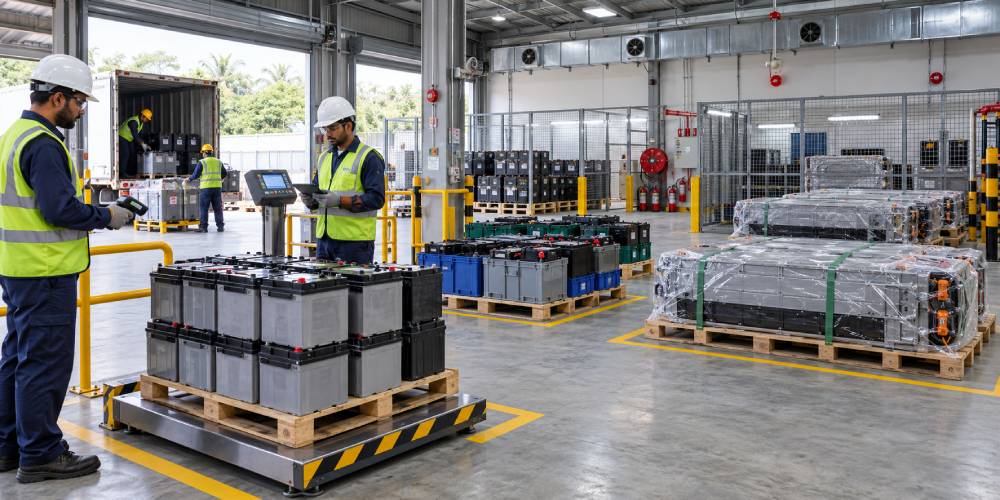
Battery collection is no longer just a matter of placing used batteries in a warehouse until a recycler collects them. CPCB’s July 2026 guidelines set out procedures for the collection, handling, storage and transportation of waste batteries in India under the Battery Waste Management Rules, 2022. These requirements apply across lead-acid, lithium-ion, zinc-based, nickel-cadmium and other battery streams.
The guidelines operate within the Battery Waste Management Rules, 2022. They are relevant to producers, recyclers and refurbishers planning or operating battery collection centres. This guide explains who may establish a collection centre, which approvals are relevant and how batteries should be received, segregated, stored and transferred.
What Is a Battery Collection Centre?
A battery collection centre is a dedicated facility used to collect, sort and temporarily store waste batteries before transferring them to an authorised recycler or refurbisher. It forms part of the formal channel through which producers meet their collection and recycling or refurbishment obligations.
A collection centre is different from a recycling plant. It cannot dismantle, shred or process waste batteries. If waste batteries are stored within a manufacturing, recycling or refurbishing unit, that storage area is not treated as a separate collection centre under the guideline.
Who Can Establish a Battery Collection Centre?
Under the CPCB guideline, only the following entities may establish collection centres:
- Battery producers
- Registered battery recyclers
- Registered battery refurbishers
This restriction is intended to reduce unsafe handling and prevent waste batteries from entering informal channels. Collection centres may establish linked drop points at locations such as retail outlets, offices, educational institutions, residential associations and commercial complexes.
CPCB or SPCB: Who Approves a Collection Centre?
This distinction is important. CPCB issued the national guideline, but the applicable approvals for a collection centre are obtained from the respective State Pollution Control Board or Pollution Control Committee.
As applicable to the facility, the collection centre must obtain Consent to Establish, Consent to Operate and authorisation under the Hazardous and Other Wastes framework from the concerned SPCB/PCC. The guideline places collection centres under the Green Category, as applicable. The operator must also submit a site plan so the authority can assess and approve the proposed storage capacity.
The exact application process and documents may vary by state or Union Territory. Operators should therefore check the relevant SPCB/PCC procedure before leasing, constructing or modifying a facility.
Site and Infrastructure Requirements
The approved capacity and battery mix should guide the design of the collection centre. Facility design and safety systems must meet the CPCB guideline and the conditions imposed by the concerned SPCB/PCC. The following checklist summarises the principal provisions; the exact requirements depend on the battery mix, site and approved capacity.:
- Covered, ventilated storage protected from sunlight and adverse weather
- Non-flammable flooring made from concrete, ceramic, metal or another suitable material
- Separate areas for portable, automotive, industrial and EV batteries
- Further segregation by chemistry, including lead-acid, lithium-ion, zinc-based and nickel-cadmium
- Fire-rated partitions and adequate gaps between battery stacks
- Flameproof electrical fittings, automatic smoke and heat detection and suitable firefighting systems
- Secondary containment, sloped flooring, collection pits and drainage connected to a sump
- At least two escape routes and access for forklifts and firefighting equipment
- Weighing equipment and a controlled area for receiving and recording deliveries
- Emergency equipment for spills, fire, evacuation and first aid
Larger storage facilities should have CO2 or another suitable inert-gas fire-suppression system. Storage capacity must remain within the quantity specified in the approved CTO or hazardous-waste authorisation.
Battery Segregation and Storage Requirements
Different battery chemistries present different hazards. Mixing them increases the risk of leakage, short circuit, heat generation and fire.
Battery category | Recommended storage approach |
|---|---|
Small alkaline and button batteries | Plastic drums or boxes without unsafe over-stacking |
Small rechargeable lithium-ion batteries | Plastic drums or boxes; avoid stacking large containers |
Nickel-metal hydride and nickel-cadmium batteries | Separate plastic drums or boxes protected against collapse or damage |
Used lead-acid batteries | Store upright on pallets; use non-conductive strapping for movement |
Large EV lithium-ion batteries | Store upright on wrapped pallets without stacking; secure with non-conductive strapping |
Containers and packaging should prevent movement, corrosion, terminal contact and short circuits. Metal containers should not be used unlined; if used, they should have an electrically non-conductive lining. Battery terminals should be protected where required.
Damaged or leaking batteries must be isolated and individually protected. Spilled electrolyte should be contained using suitable absorbent material, and contaminated absorbents must be managed under the applicable hazardous-waste requirements, including transfer to an authorised TSDF where required.
Fire Safety and Worker Protection
Only authorised and trained personnel should enter battery storage areas. Workers handling damaged or defective batteries should use appropriate gloves, protective eyewear, aprons and safety footwear. Loading and unloading must be supervised by trained and experienced staff.
The operator should prepare written procedures for receiving, internal movement, storage, spill control and emergency response. HAZMAT-trained personnel should be designated to implement them. Storage areas should be inspected regularly for damaged batteries, leaks and unsafe stacking, with findings recorded. Emergency drills should also be conducted and documented.
For lithium-ion batteries, fire controls must address retained electrical charge and thermal-runaway risk. The guideline also provides for a dry discharge facility at collection centres, primarily for lithium-ion batteries; portable batteries may not require discharge. This limited safety step does not permit dismantling, shredding or material recovery.
Rules for Battery Drop Points
A drop point is a convenient location where consumers or businesses deposit used batteries before scheduled pickup. It is not a full collection centre.
Drop points should use secure, electrolyte-resistant containers in dry, ventilated and weather-protected locations. They should be kept away from children and pets, display clear instructions and hold only modest quantities supported by timely pickup. No acid draining, seal removal or dismantling is permitted at a drop point.
Storage Period, Records and Annual Returns
A producer, collection centre, recycler or refurbisher may normally store waste batteries for up to 90 days. The concerned SPCB/PCC may extend this period under the Hazardous and Other Wastes Rules. An extension should never be assumed.
The collection centre should record:
- Date and source of each receipt
- Battery type, chemistry, quantity and weight
- Storage and inspection details
- Sale or transfer date and quantity
- Identity and authorisation details of the receiving recycler or refurbisher
- Transport and accident records, where applicable
Under the July 2026 guideline, collection centres should submit the previous financial year’s annual return to the concerned SPCB/PCC by 30 June in Form 4 under the Hazardous and Other Wastes (Management and Transboundary Movement) Rules, 2016, unless a subsequent official notification extends the deadline.
Transportation and Transfer Requirements
Waste batteries must be transferred only to eligible registered recyclers or authorised refurbishers, in accordance with the applicable rules and approvals. A collection centre cannot sell collected batteries to traders or dealers.
Transport arrangements must comply with the applicable hazardous-waste and motor-vehicle requirements. Batteries should not be mixed with unrelated materials, and the vehicle or load area should protect them from rain, heat, impact and leakage. Lead-acid batteries require leak-proof transport arrangements. Lithium-ion batteries require terminal protection and packaging that prevents short circuits, crushing and contact with conductive materials or liquids. The guideline states that lithium-ion waste battery packs may have a state of charge below 30% of rated capacity during transportation.
Businesses handling battery scrap can review Gravita’s guide to battery scrap pricing, compliance and safe disposal. Chemistry-specific handling considerations are also explained in the guides to lead-acid battery scrap and lithium-ion battery recycling.
Battery Collection Centre Compliance Checklist
- Confirm that the operator is a producer, recycler or refurbisher eligible to establish the centre.
- Obtain the applicable CTE, CTO and hazardous-waste authorisation from the SPCB/PCC.
- Submit the site plan and obtain approval for storage capacity.
- Keep quantities within the approved capacity and normal 90-day storage period.
- Segregate batteries by application and chemistry.
- Install containment, ventilation, detection and fire-protection systems.
- Isolate damaged batteries and maintain spill-response supplies.
- Train personnel, provide PPE and document inspections and drills.
- Maintain receipt, storage, transfer, transporter and destination records.
- Send batteries only to registered recyclers or authorised refurbishers.
- Submit the annual return by 30 June.
- Review approvals whenever capacity, layout or battery categories change.
Building a Traceable Battery Collection Network
A compliant collection centre connects reverse logistics with safe, documented recycling. Its role is to receive, identify, segregate and protect waste batteries-not to process them. Strong storage controls and traceable transfers help producers meet EPR responsibilities while directing recoverable materials away from informal handling.
Collection-centre operators should read these requirements alongside Gravita’s guide to the CPCB Battery Recycling Guidelines 2026. Organisations exploring battery collection, responsible recycling or material-recovery partnerships can contact Gravita India.
Frequently Asked Questions
Does CPCB directly register every battery collection centre?
CPCB issued the national guideline. Collection centres must obtain the applicable CTE, CTO and hazardous-waste authorisation from the concerned SPCB or PCC, which also assesses the site plan and approved storage capacity.
Can a scrap dealer open a battery collection centre?
Not independently under the guideline. Only producers, recyclers and refurbishers are allowed to establish collection centres.
Can batteries be dismantled at a collection centre?
No. Dismantling, shredding and processing are prohibited. Batteries must be transferred to an authorised recycler or refurbisher.
How long can waste batteries be stored?
The normal limit is 90 days. The concerned SPCB/PCC may grant an extension under the applicable hazardous-waste rules.
Can different battery chemistries be stored together?
They should be segregated by type and chemistry. Lead-acid, lithium-ion, nickel-cadmium and other batteries have different leakage, electrical and fire risks.
Disclaimer: This article summarises CPCB’s July 2026 Guidelines for Collection, Handling, Storage, and Transportation of Waste Batteries and the applicable waste-management framework. Requirements may change through subsequent notifications and may vary by facility, battery type, state and authorisation conditions. Check the latest CPCB and SPCB/PCC requirements before acting.

