


 Share
Share
Lead Acid Battery Scrap: A B2B Guide for Suppliers & Scrap Dealers on Pricing, Grading & Selling to Recyclers
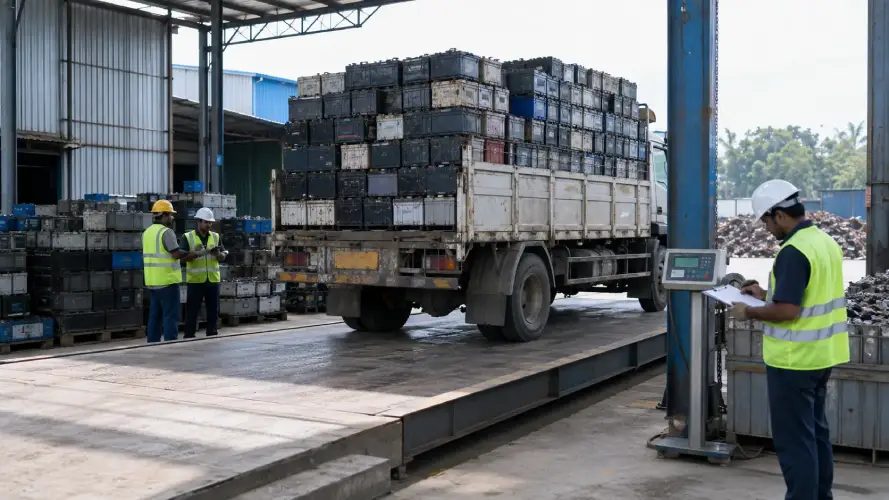
If you're a battery scrap supplier or dealer, you already know that not all lead-acid battery scrap is priced the same - and not every recycler you sell to offers the same terms, transparency, or reliability. What separates a supplier who consistently gets fair, competitive rates from one who doesn't usually comes down to three things: understanding how grading works, knowing what drives daily pricing, and choosing the right recycler to sell to.
This guide breaks down all three, specifically for B2B suppliers and scrap dealers looking to build a steady, compliant, and profitable battery scrap supply channel.
Understanding How Lead Acid Battery Scrap Is Graded
Before any price is quoted, a recycler will grade the scrap. Grading determines the recoverable lead content and processing complexity, which is what pricing is actually based on - not just the battery's overall weight.
The main grading factors are:
Battery type. Automotive SLI batteries, industrial tubular batteries, and VRLA/sealed batteries (used in UPS and telecom applications) have different lead-to-plastic ratios and are graded separately.
Condition. Intact, non-leaking batteries are easier and safer to process than damaged or leaking ones, which involve additional handling and environmental risk.
Lead content estimate. Recyclers estimate the proportion of lead grids, lead paste, and lead oxide against the polypropylene casing and separators. A higher lead-to-plastic ratio typically commands a better rate.
Battery weight/size category. Bulk automotive batteries, small UPS batteries, and large industrial batteries are often priced in separate slabs since processing costs differ by category.
Purity and contamination. Batteries mixed with non-battery scrap, water, or foreign material are graded down, since contamination affects smelting yield.
Suppliers who pre-sort scrap by these categories before it reaches the yard consistently get better realisation than those delivering mixed, ungraded loads - sorting essentially shifts grading work (and cost) away from the recycler, which is reflected in the price.
What Actually Drives Battery Scrap Pricing
Battery scrap pricing isn't arbitrary - it moves with a few identifiable factors, and understanding them helps a supplier negotiate and time sales more effectively.
International and domestic lead prices. Since recovered lead is sold onward as refined lead ingots or alloys, scrap battery prices track the London Metal Exchange (LME) lead price and domestic secondary lead market rates. When LME lead rises, scrap battery rates typically follow within days.
Recovery yield assumptions. Recyclers price scrap based on the expected volume of usable lead they'll recover per tonne of scrap - this is why grading directly affects the rate offered, not just the weight.
Transport and logistics cost. Distance from the recycling facility, minimum load size, and whether the recycler arranges pickup or requires delivery all factor into the net price a supplier realises.
Regulatory compliance costs. Recyclers operating under the Battery Waste Management Rules, 2022, bear compliance, EPR, and pollution-control costs that informal buyers don't. This is sometimes reflected in marginally lower headline rates from formal recyclers compared to unregistered cash buyers - but it comes with legal protection and consistent, auditable business, which matters for a dealer building a long-term operation.
Demand cycles. Battery replacement volumes rise seasonally (post-summer, when battery failure rates peak, and around festive/vehicle-sale periods), which can tighten scrap supply and support better rates.
If you're tracking scrap markets more broadly, our guide on how to find trusted and legit scrap buyers covers red flags to watch for when evaluating any buyer, not just for batteries.
Selling Formally vs Informally: What It Means for Your Business
A significant share of India's battery scrap trade still runs through unregistered, informal channels. For an individual seller offloading one or two batteries, this may not matter much. But for a supplier or dealer running scrap as a business, the difference is significant:
Factor | Selling to Registered Recycler | Selling to Informal Buyer |
Pricing transparency | Rate linked to live lead prices, documented | Often negotiated, inconsistent |
Payment | Formal invoice, traceable payment | Frequently cash, undocumented |
Legal protection | Compliant transaction, no downstream liability | Seller can be implicated if scrap is later linked to illegal processing |
Volume scalability | Can offer long-term supply contracts | Limited by informal buyer's capacity |
Business growth | Builds a track record for larger B2B contracts | Stays capped as an unregistered operation |
For a dealer looking to scale from small-volume trading into a consistent B2B supply business - supplying to institutions, workshops, or industrial generators - building a relationship with a registered recycler is what makes that growth possible. Registered recyclers are also more likely to offer long-term procurement agreements once a supplier demonstrates consistent volume and grading discipline.
How to Become a Compliant Battery Scrap Supplier
With the CPCB's July 2026 Guidelines for Collection, Handling, Storage, and Transportation of Waste Batteries, compliance is now an important part of the battery scrap supply chain. The guidelines cover entities involved in collection, segregation, transportation and recycling of waste batteries, including lead-acid batteries.
If your business operates as a Collection Centre, the guidelines require the applicable CTE, CTO and/or Hazardous Waste Authorisation from the concerned SPCB/PCC. The facility's site plan and storage capacity are also subject to SPCB/PCC assessment.
For suppliers and aggregators, the practical checklist is:
1. Know your regulatory status and whether your operation qualifies as a Collection Centre.
2. Obtain applicable SPCB/PCC approvals where required.
3. Store and transport batteries safely as per applicable guidelines.
4. Maintain proper records of collection, storage and transfer.
5. Channelise waste batteries only through authorised recyclers/refurbishers.
For recyclers, CPCB's guidelines additionally require registration on the Battery Waste Management EPR portal, along with procurement, recycling and sales reporting.
Gravita India's battery scrap procurement channel works directly with suppliers and dealers across scale - from regional traders to larger aggregators - offering live-rate-based pricing, transparent weighment, and documented purchase terms.
What Recyclers Look for in a Long-Term Supplier
From a recycler's side, the most valuable suppliers aren't necessarily the ones with the single largest one-time lot - they're the ones who deliver consistent quality, consistent volume, and consistent documentation over time. If you're evaluating which recycler to build a long-term relationship with, our detailed breakdown on how to choose a lead recycling company in India is worth reading - the same due-diligence points apply whether you're an institutional generator or a scrap trading business.
It's also worth understanding what happens to the scrap after it's sold - recycled lead now supplies the majority of India's lead demand, which is covered in more detail in our piece on recycled lead vs primary lead: quality, performance & economics.
Frequently Asked Questions
How is lead acid battery scrap priced - by weight or by lead content?
Both. Base pricing typically starts with weight, but the final rate is adjusted based on grading - battery type, condition, and estimated recoverable lead content.
Does a scrap dealer need any registration to sell battery scrap to a recycler?
The requirement depends on the nature of the activity. If the facility operates as a Collection Centre, the CPCB's July 2026 guidelines require applicable CTE, CTO and/or Hazardous Waste Authorisation from the concerned SPCB/PCC. Waste batteries collected through such centres must be channelised only to authorised recyclers or refurbishers.
Why do prices vary between recyclers for the same scrap?
Differences usually come down to grading methodology, recovery yield assumptions, transport arrangements, and how each recycler prices in compliance and processing costs.
Can a new scrap dealer start supplying to Gravita in small volumes?
Yes - Gravita works with suppliers across volume ranges and typically builds toward long-term procurement arrangements as a supplier demonstrates consistent grading and delivery.
Looking to sell lead acid battery scrap in bulk or set up a regular supply arrangement? Connect with Gravita's procurement team for current rates and onboarding.