


 Share
Share
UPS & Inverter Battery Scrap: A Disposal Guide for Banks, Hotels, Offices & Telecom Companies
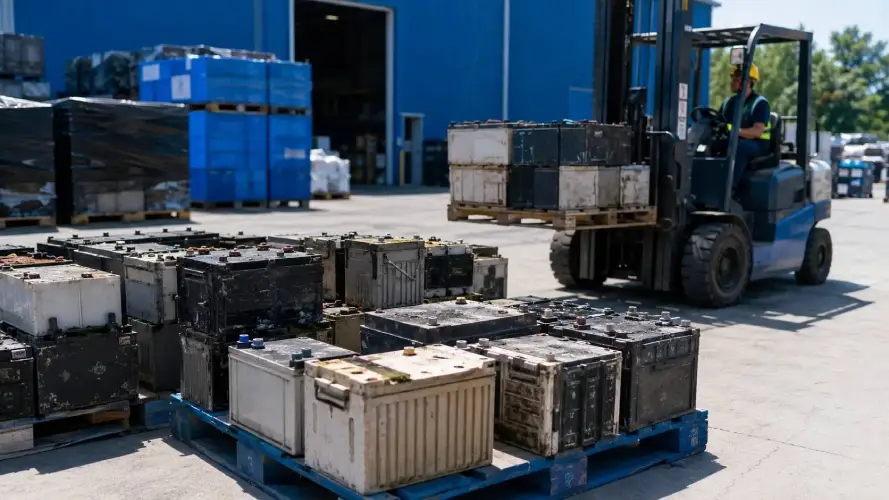
Every organisation that runs a UPS system, inverter bank, or backup power setup eventually faces the same question: what happens when the batteries die? For a data centre, bank branch, hotel, corporate office, or telecom tower, this isn't a once-in-a-while problem - it's a recurring operational task, and one that carries more legal weight than most facility managers realise.
Used UPS and inverter batteries are lead-acid batteries. Under Indian law, they are classified as hazardous waste. That means they cannot be handed over to the nearest scrap dealer, thrown in a general waste bin, or sold informally without documentation. Doing so exposes an organisation to environmental liability, regulatory penalties, and in some cases, data or asset security risks tied to how the disposal is handled.
This guide walks institutional buyers - banks, hotels, IT/ITES offices, and telecom companies - through what the law requires, how the disposal process actually works, and how to choose a compliant battery scrap buyer.
Why UPS & Inverter Battery Disposal Is Different From Regular Waste Disposal
A UPS or inverter battery is a sealed or flooded lead-acid battery containing lead plates, lead oxide paste, and sulphuric acid electrolyte. All three components are hazardous if released into soil, water, or air. This is why lead-acid batteries fall squarely under India's Battery Waste Management Rules, 2022, which replaced the earlier Batteries (Management and Handling) Rules, 2001.
Under these rules, any organisation that generates used batteries - referred to as a Bulk Consumer or Bulk Generator - has a legal obligation to:
- Store used batteries safely, without leakage or damage, until collection
- Hand over batteries only to a registered producer, recycler, or authorised collection agency
- Maintain records of the quantity disposed and the recycler it was sold to
- Avoid transferring batteries to unregistered, informal scrap collectors
For banks with ATM backup systems across hundreds of branches, hotel chains running inverter banks at every property, and telecom companies with battery backup at thousands of tower sites, this isn't a minor compliance footnote - it's a recurring, auditable process that needs a reliable, documented channel.
The Real Risk: Informal Scrap Channels
A large share of India's UPS and inverter battery scrap still moves through unregistered, informal recyclers - small operators who offer marginally higher cash prices but operate without pollution control equipment, safety systems, or documentation.
For an institutional generator, selling to an informal buyer creates three distinct risks:
Environmental and legal liability. If scrap sold informally is later traced back to illegal lead smelting or dumping, the generating organisation can be held liable as the source, even though they no longer possess the material.
No compliance paper trail. Banks, listed companies, and telecom operators increasingly need documented proof of responsible waste disposal for ESG reporting, statutory audits, and CSR/EPR disclosures. Informal transactions leave no such trail.
Asset and data security. For banks and IT-heavy offices, decommissioned UPS units sometimes still house control boards or logging components. An unverified scrap handler picking up equipment from a branch or server room is a weak link in an otherwise controlled physical security process.
Working with a registered recycler resolves all three issues at once - proper hazardous waste handling, documented compliance, and a controlled, professional collection process.
How the Disposal Process Works
A compliant battery-recycling process typically follows these steps. Where applicable, Gravita can support institutional customers through its battery-scrap procurement and recycling network.
- Inventory and grading – Batteries are counted, weighed, and checked for damage or leakage before pickup.
- Documentation – A purchase order or scrap sale note is issued, along with the recycler's registration and hazardous waste handling authorisation details.
- Safe collection – Batteries are transported in compliant vehicles, following hazardous material handling norms, directly from the site (branch, hotel, office, or tower location).
- Weighment and pricing – Final pricing is based on live lead scrap rates, battery type, and condition, confirmed at the point of collection.
- Compliance certificate – The generator receives a disposal/collection record that can be used for internal ESG, EPR, or audit documentation.
For organisations managing disposal across multiple sites - branches, properties, or tower locations - this process can typically be scheduled on a recurring basis, avoiding the need to handle each location as a one-off transaction.
What Each Sector Should Specifically Look For
Banks and NBFCs: Look for a recycler who can offer centralised documentation across branch-level pickups, since audit and compliance reporting is usually consolidated at the regional or head-office level rather than per branch.
Hotels and hospitality chains: Inverter and UPS batteries are often replaced on a rolling maintenance schedule across properties. A recycler offering consistent pricing and pickup terms across locations avoids the inefficiency of negotiating separately at each property.
Corporate offices and IT/ITES companies: Server room and data centre UPS batteries are typically higher-capacity units. Prioritise recyclers experienced with industrial-grade VRLA and flooded battery types, not just automotive-scale volumes.
Telecom companies: With battery backup at a large number of tower sites, telecom operators need a recycler capable of handling scattered, small-volume pickups reliably and consolidating them into a single compliance record - a very different logistics challenge from a single large industrial site.
A Quick Checklist Before You Choose a Buyer
- Is the recycler registered under the Battery Waste Management Rules, 2022?
- Do they issue a documented sale/collection record for every pickup?
- Can they service multiple locations under one commercial arrangement?
- Do they offer transparent, live-rate-based pricing rather than negotiated cash deals?
- Do they have their own processing capacity, or are they a middleman reselling to unknown third parties?
If you're evaluating recyclers more broadly, our detailed guide on how to choose a lead recycling company in India covers the due-diligence checklist in more depth.
Why Institutions Choose Gravita for Battery Scrap Disposal
Gravita India has been recycling lead-acid batteries for over three decades, with processing facilities operating under applicable Pollution Control Board approvals and authorisations, supported by a documented collection and compliance process built specifically for bulk and institutional generators. Whether it's a single corporate office or a pan-India network of branches, hotels, or tower sites, Gravita's battery scrap procurement network is set up to handle recurring, multi-location disposal with proper documentation at every step.
Beyond compliance, there's an environmental case too - recycled lead now accounts for the vast majority of India's lead supply, meaning every battery routed through a formal recycler directly reduces the need for primary lead mining. You can read more on this in our piece on recycled lead vs primary lead.
Frequently Asked Questions
Is it legal to sell used UPS batteries to any local scrap dealer?
No. Under the Battery Waste Management Rules, 2022, used lead-acid batteries must be handed over only to a registered producer, recycler, or authorised collection agent - not an unregistered local scrap buyer.
Do we get any compliance proof after disposal?
A registered recycler will provide a documented collection or sale record confirming quantity, battery type, and disposal date, which can be used for internal audit or EPR reporting purposes.
Can pricing be fixed across multiple branch or property locations?
Yes, most registered recyclers, including Gravita, can offer a standardised commercial arrangement for organisations disposing of batteries across multiple sites on a recurring basis.
What is the difference between UPS batteries and inverter batteries for disposal purposes?
Both are lead-acid batteries and are treated identically under battery waste regulations, though UPS batteries (often VRLA/sealed type) and inverter batteries (often flooded/tubular type) may be graded and priced slightly differently based on lead content and condition.
Ready to set up a compliant battery scrap disposal process for your organisation? Get in touch with Gravita's procurement team for pricing and pickup scheduling.