


 Share
Share
What Is Extended Producer Responsibility (EPR) for Plastics in India? Rules, Penalties & Compliance Roadmap
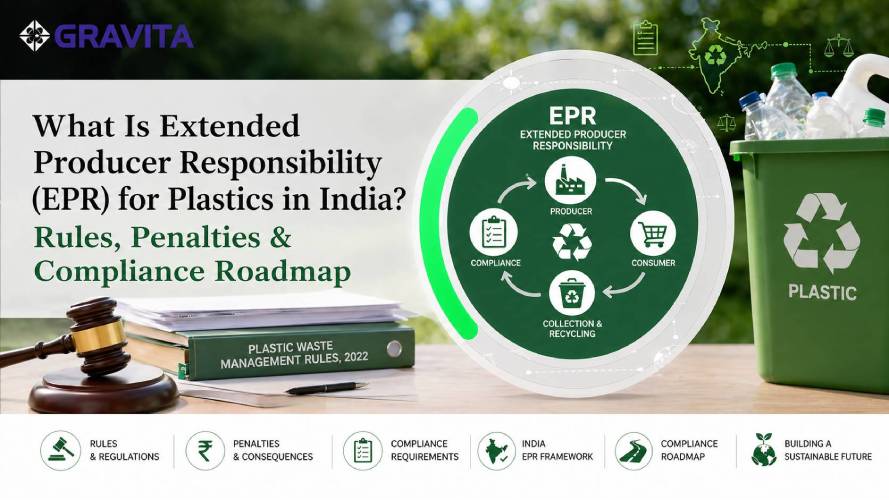
India generates over 4 million metric tonnes of plastic waste every year, according to CPCB estimates. Managing this waste is no longer just the government's problem. Under the Extended Producer Responsibility (EPR) framework for plastics, businesses that manufacture, import, or sell plastic-packaged goods are now legally accountable for the end-of-life management of their plastic packaging.
Whether you are a brand owner, packaging manufacturer, or importer, EPR compliance is a legal obligation backed by enforceable penalties. This guide explains what EPR for plastics means, who it applies to, what the rules say, and how to achieve compliance in 2026.
What Is EPR for Plastics?
Extended Producer Responsibility (EPR) is an environmental policy that holds producers, importers, and brand owners (PIBOs) responsible for the complete lifecycle of their products, including collection, recycling, and disposal after consumer use.
For plastics, EPR means that if your business introduces plastic packaging into the Indian market, you are responsible for ensuring a prescribed percentage (as per CPCB targets) of plastic waste is collected and recycled through certified recyclers. You do not need to run your own recycling facility. Instead, you purchase EPR certificates from CPCB-registered recyclers who do this work on your behalf.
Legal Framework: Plastic Waste Management Rules & 2022 Amendment
EPR for plastics is governed by the Plastic Waste Management (PWM) Rules, 2016, significantly strengthened by the PWM (Amendment) Rules, 2022, which transformed EPR from a voluntary concept into a strictly enforced legal obligation with the following key provisions:
Mandatory registration on the CPCB EPR portal for all PIBOs
Annual EPR targets based on the quantity of plastic packaging placed on market
Category-wise recycling obligations for different plastic packaging types
EPR certificate system - PIBOs fulfil obligations by obtaining certificates from registered recyclers
Annual compliance reporting to CPCB through the online portal
Categories of Plastic Packaging Under EPR
Category I: Rigid plastic packaging - bottles, containers, caps
Category II: Flexible plastic packaging - pouches, sachets, wrapping films
Category III: Multi-layered plastic packaging - plastic combined with other materials
Category IV: Plastic sheets and covers - carry bags, bubble wrap
Each category has phased recycling targets set by CPCB, ramping up toward 100% over a defined timeline. Businesses should check the latest CPCB portal for current-year targets applicable to their categories.
Who Needs to Comply with Plastic EPR?
EPR for plastics applies to three categories of entities - collectively called PIBOs:
Producers: Manufacturers of plastic packaging material, plastic sheets, or plastic carry bags in India.
Importers: Entities importing plastic packaging or products packed in plastic into India for commercial sale.
Brand Owners: Any company whose brand name appears on a product sold in plastic packaging - covering FMCG, food and beverage, pharma, cosmetics, electronics, and e-commerce businesses.
Brand owners carry the broadest responsibility under the framework . If your brand appears on plastic-packaged goods sold in India, you have an EPR obligation regardless of whether you manufactured the packaging yourself.
How the EPR Certificate System Works
Register on CPCB EPR Portal: Declare your PIBO type, plastic categories used, and estimated annual quantity placed on market.
Calculate Your Annual Obligation: Based on your registration data and CPCB's category-wise targets, your obligation in metric tonnes is determined.
Procure EPR Certificates: Purchase certificates from CPCB-registered recyclers who have physically processed equivalent plastic waste. All transactions happen through the portal - paper or offline certificates are not valid.
File Annual Return: Submit your compliance return on the CPCB portal before the financial year deadline, with certificate details and recycler information.
Renew and Scale: Registration is renewed annually and your obligation scales with business growth.
Penalties for Non-Compliance
Environmental Compensation (EC): CPCB levies Environmental Compensation (EC) based on the extent of non-compliance, calculated as per notified guidelines. For large businesses, this can result in significant financial liability.
Suspension of Registration: Repeated non-compliance can lead to suspension or cancellation of EPR registration, disrupting business operations.
Legal Action: In severe cases, CPCB can initiate proceedings under the Environment (Protection) Act, 1986, which includes provisions for fines and imprisonment.
Reputational Risk: ESG scrutiny from investors and international buyers is intensifying. Non-compliance can damage brand trust and create export market barriers.
Step-by-Step EPR Compliance Roadmap for 2026
Conduct a Plastic Packaging Audit: Document all plastic packaging types used - by category, material, and annual quantity.
Determine Your PIBO Category: Establish whether you are a Producer, Importer, Brand Owner, or a combination of these.
Register on the CPCB EPR Portal: Submit registration with business documents, product details, and plastic quantities by category.
Engage a CPCB-Registered Recycler: Identify and partner with registered recyclers. All certificate procurement must happen through the portal.
Procure Sufficient EPR Certificates: Buy certificates in metric tonnes to fully cover your annual obligation before year-end.
File Your Annual EPR Return: Submit before the CPCB deadline with complete certificate and recycler documentation.
Plan for Rising Targets: As CPCB targets increase annually, explore plastic reduction and design-for-recyclability initiatives to lower future obligations.
Common Compliance Mistakes to Avoid
Buying offline certificates: Only CPCB-portal-generated certificates are valid. Paper certificates are rejected during audits.
Underreporting plastic volumes: Declaring lower quantities than actual creates serious liability if discovered.
Ignoring multi-layered plastics: MLP obligations exist even where recycling is difficult - co-processing is an accepted compliance route.
Missing return deadlines: Late filing attracts penalties even when sufficient certificates have been procured.
Delaying registration: EPR liability accrues from the date your products enter the market. Delayed registration builds retrospective liability.
How Gravita India Can Help
Gravita India is one of India's most experienced recycling and EPR consultancy companies, with CPCB-registered facilities for plastic waste processing and a dedicated compliance support team. We help businesses with EPR registration, obligation calculation, certificate procurement, and annual reporting - entirely end to end.
Contact Gravita's EPR Consultancy team today to assess your plastic EPR obligation and build a compliance programme that protects your business in 2026 and beyond.
Frequently Asked Questions
Does EPR for plastics apply to small businesses?
EPR applies broadly to all PIBOs. Simplified provisions may exist for micro-enterprises, but all businesses using plastic packaging should verify their obligation status on the CPCB portal.
Can a brand owner transfer EPR liability to its packaging supplier?
No. EPR liability rests with the brand owner whose name appears on the product. Contractual arrangements with suppliers do not transfer statutory liability under the PWM Rules.
What happens if I miss my annual EPR target?
CPCB levies Environmental Compensation on the shortfall quantity at prescribed per-tonne rates. Repeated shortfalls can lead to suspension of registration and further enforcement action.
Do e-commerce businesses need to comply with plastic EPR?
Yes. E-commerce businesses using plastic packaging for delivery are classified as Brand Owners under the PWM Rules and must register and comply with annual EPR obligations.
Conclusion
EPR for plastics in India is a present, enforceable legal obligation - not a future concern. With CPCB enforcement intensifying and penalty mechanisms strengthening, businesses that delay compliance face rising financial, legal, and reputational risk.
Register early, calculate accurately, procure valid certificates, and file on time. Companies that treat EPR compliance seriously today will build a meaningful competitive advantage as sustainability requirements tighten across domestic and global markets.
Disclaimer: This content is intended for informational purposes only and does not constitute legal or regulatory advice. EPR compliance requirements, pricing and procedures may change based on updates issued by the Central Pollution Control Board and applicable rules. Readers should independently verify current regulations or seek professional advice before making business or compliance decisions.