


 Share
Share
Copper Scrap Buyer in India: How to Sell Copper Scrap at the Best Price & Find Verified Recyclers (2026)
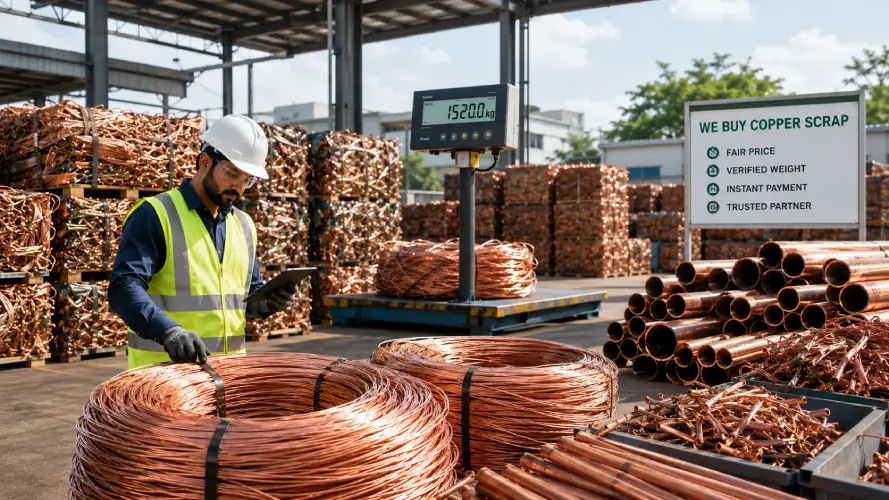
If you are sitting on copper scrap - whether it is stripped wire from an electrical project, motor windings from decommissioned equipment, heat exchanger tubes, or mixed copper from demolition - you already have something the Indian market wants badly right now.
Copper demand in India is growing faster than domestic mining can keep up with. India imports 90–95% of its copper concentrate requirements from abroad, which means every tonne of copper recovered through recycling is genuinely valuable to the domestic supply chain. In 2023–24, the government formally classified copper as a Critical Mineral under India's resource security framework - the same category as lithium, cobalt, and other materials considered strategic for the energy transition. That classification has real consequences for the scrap market: it is accelerating investment in secondary copper processing and making established copper scrap buyers more active than they have been in years.
But most copper scrap sellers in India - particularly small and mid-sized industrial units, electrical contractors, demolition companies, and fabricators - still sell below market value. The reasons are usually the same: they don't know how their scrap is graded, they don't know what price they should expect, and they end up selling through intermediary dealers who take a significant margin in between.
This guide covers everything you need to know to sell copper scrap in India at the best price - how scrap is graded, what drives the price, which red flags to watch for in buyers, and how to identify a verified recycler worth dealing with directly.
Why Copper Scrap Is More Valuable Right Now Than Most Sellers Realise
India's copper deficit is structural and worsening. The three main domestic mining belts - Singhbhum in Jharkhand, Khetri in Rajasthan, and Malanjkhand in Madhya Pradesh - produce nowhere near enough concentrate to meet industrial demand. Meanwhile, demand is being pushed up from multiple directions simultaneously.
Electric vehicles use three to four times more copper than a conventional petrol car. Every solar panel installation, every wind turbine, and every kilometre of upgraded power transmission line requires copper in volume. India's national railway electrification programme covering over 1,26,000 km of track is a substantial ongoing draw. Data centres, driven by AI infrastructure investment, are adding to consumption. And the "Housing for All" push continues to pull copper wire and plumbing fittings into residential construction across the country.
The result is that secondary copper - copper recovered from scrap - now accounts for roughly 20–25% of India's domestic copper supply and that share is growing year on year. For scrap generators, this translates into a genuine seller's market where established, direct buyers are competing to secure consistent supply. If you are still selling through a chain of intermediary kabadiwallas or local dealers without knowing what your material is actually worth, you are almost certainly leaving money on the table.
Understanding Copper Scrap Grades: This Is What Determines Your Price
The single most important thing to understand before you sell copper scrap is that "copper scrap" is not one material - it is a broad category with a wide range of grades, and the price difference between the top and bottom of that range can be substantial. A buyer will assess your material against established grading standards before making an offer. Knowing these grades before the conversation puts you in a much stronger position.
No. 1 Copper (Millberry / Bare Bright)
This is the premium grade - clean, uncoated, unalloyed copper wire or bus bar of 1mm diameter or larger, with no solder, paint, insulation, plating, or other contamination. It is essentially ready to melt without any pre-processing. Millberry copper commands the highest price, typically quoted at 85-90% of the London Metal Exchange (LME) copper price. If you have large quantities of bare copper wire from cable manufacturing offcuts or freshly stripped single-core cable, this is what you have.
No. 2 Copper
Clean copper wire and pipe with insulation removed, or unalloyed copper that has some surface oxidation, minor contamination, or mixed forms. Still a strong grade - typically priced at 80-90% of Millberry rates. Most copper recovered from standard electrical work, plumbing, and light industrial sources falls into this category once stripped.
Insulated Copper Wire (ICW)
Copper wire with plastic or rubber insulation still on it. The price here is entirely dependent on the copper recovery percentage - how much copper you actually get per tonne of scrap after the insulation is removed. High-recovery ICW, such as thick single-core cables with 60%+ copper content, prices significantly better than low-recovery mixed cable bundles or thin multi-core with 20–30% copper content. Buyers will either estimate recovery visually, test-strip a sample, or use standard grade tables. Knowing your cable type before the conversation helps you verify their assessment is accurate.
Brass Scrap
Brass is an alloy of copper and zinc, and it is priced and traded separately from pure copper scrap. Common sources include fittings, valves, taps, shell casings, and hardware. Brass scrap prices are lower than pure copper on a per-kg basis because of the zinc content dilution, but volumes are typically high and brass is widely traded. The copper content of brass typically ranges from 60–85% depending on the grade, and buyers will assess this when pricing your material.
Bronze Scrap
Bronze is copper alloyed primarily with tin, sometimes with lead or other elements. Common sources include bearings, bushings, valves, marine hardware, and old industrial machinery components. Again, priced separately from pure copper - evaluated on copper recovery and alloy composition.
Electric Motor Windings and Transformer Scrap
Copper windings from electric motors, generators, and transformers are a significant scrap source for industrial sellers. The copper is high grade but requires stripping or burning/smelting to separate it from the steel laminations and insulation materials. Prices for motor windings are quoted on a per-kg basis but adjusted for the copper recovery percentage the processor expects to achieve. Clean windings separated from steel command better prices than full motor bodies.
Mixed / Low-Grade Copper
Contaminated copper, copper mixed with other metals, burnt wire with carbon residue, and highly oxidised material fall into lower-grade categories. Buyers will heavily discount these because additional processing is required. If you can invest even basic preparation - stripping insulation, separating copper from other metals - the price improvement is usually worth the effort.
How Copper Scrap Is Priced in India: The Factors That Move the Number
Copper scrap does not have a fixed price. It moves daily, sometimes significantly. Understanding what drives the price helps you time your sale intelligently and verify that the price you are being offered is reasonable.
LME copper price: The London Metal Exchange copper price is the global benchmark. All domestic Indian copper scrap grades are priced at a discount to LME refined copper, with the discount depending on grade, form, and contamination. When LME copper rises, domestic scrap prices follow. When it falls, they do too. Checking the current LME copper price before any price discussion with a buyer is non-negotiable - it takes thirty seconds and tells you the ceiling your scrap is priced against.
USD/INR exchange rate: Since LME prices are denominated in US dollars, currency movements directly affect the rupee-denominated price you receive. A weakening rupee generally means higher rupee prices for copper scrap, even if the LME price in dollars has not moved.
Domestic demand conditions: Seasonal demand from cable manufacturers, construction activity, and automotive production drives short-term fluctuations in domestic scrap buying interest. Buyers are more active and prices are stronger when their downstream production is running at capacity.
Import volumes: When India imports large quantities of copper scrap from the USA, Europe, or the Middle East, domestic scrap faces price pressure. When imports slow - due to shipping costs, trade restrictions, or supply tightness in exporting markets - domestic scrap becomes more valuable.
Volume and consistency: A one-time sale of 500 kg will almost always get a worse price than a monthly supply arrangement of 5 MT. Established buyers price better for consistent, regular supply partners because it reduces their procurement uncertainty. If your facility generates copper scrap regularly, positioning yourself as a supply partner rather than a spot seller materially improves your pricing outcome.
How to Prepare Your Copper Scrap Before Selling
A little preparation before you sell can significantly improve what you get paid. Buyers price based on what they have to do with your material after they receive it. The less work they have to do, the better the price.
Strip insulated wire: If you have insulated copper cable and any volume of it, stripping the insulation - even manually - upgrades it from ICW grade to No. 2 or No. 1 copper, which commands a materially better per-kg rate. For large volumes, wire stripping machines pay for themselves quickly.
Separate by grade: Mixing Millberry with No. 2 copper, or mixing pure copper with brass, means the buyer prices the entire lot at the lowest grade present. Keeping grades separate takes more effort but means each grade can be priced correctly.
Remove non-copper attachments: Steel bolts, aluminium fittings, plastic connectors, and rubber gaskets reduce your copper recovery percentage and get discounted accordingly. Remove them where practical.
Clean motor windings: If you have motor or transformer windings, separating the copper winding packs from the steel lamination stacks adds significant value. A buyer buying complete motor bodies has to factor in their processing cost - you pay that cost indirectly through a lower price.
Know your approximate weight: Come to the conversation with a reasonable weight estimate. Buyers will weigh your material themselves, but knowing your approximate tonnage upfront establishes credibility and allows for a more substantive price discussion rather than a vague "we'll see what it weighs" approach.
How to Find a Verified Copper Scrap Buyer in India: 6 Things to Check
The copper scrap market in India has a wide range of buyers - from large, integrated recyclers with processing facilities and verified environmental compliance, to informal intermediaries who simply aggregate and resell to actual processors. The difference matters both for the price you receive and for your own compliance exposure if your scrap contains any regulated materials.
1. Are They an Actual Processor or an Intermediary?
An actual processor has a physical facility where copper scrap is refined, and converted into usable copper metal or alloys. An intermediary buys your scrap, takes a margin, and sells it on to a processor. There is nothing illegal about intermediaries, but every layer between you and the end processor costs you money. Whenever possible, selling directly to an integrated recycler - one that processes your scrap themselves - removes that margin from the equation.
Ask directly: "Do you process the copper at your own facility, or do you resell it?" A legitimate processor will answer this question clearly.
2. Are They Registered and Compliant?
Any company processing copper scrap in India - particularly if it involves smelting or chemical processing - requires environmental clearances from the State Pollution Control Board (SPCB) and GST registration. Ask for their GST number and company registration details. If they cannot or will not provide these, they are operating informally, and selling to them creates documentation and compliance risks for your own company.
If your copper scrap is derived from e-waste, batteries, or end-of-life electrical equipment, there are additional regulatory dimensions - the relevant waste streams may be subject to E-Waste Management Rules or Battery Waste Management Rules, and the buyer should be able to demonstrate registration under those frameworks.
3. Do They Weigh Transparently?
Weighing disputes are the most common source of seller dissatisfaction in scrap transactions. A legitimate buyer will weigh your material using a certified, calibrated digital scale with you or your representative present, and will issue a written weight slip before finalising the transaction. Avoid any buyer who wants to weigh material offsite, after you leave, or who cannot produce a proper weight receipt.
4. Is Their Pricing Market-Referenced?
A verified recycler will price your material with reference to the current LME copper price and the applicable grade discount. If a buyer cannot tell you what LME price they are using or refuses to explain how they arrived at their offer, that is a significant red flag. Ask: "What LME price are you basing this on, and what grade are you assigning my material?" The answers to both questions should be clear and verifiable.
5. Do They Provide Proper Transaction Documentation?
You should receive a GST invoice or purchase invoice for any copper scrap sale. This matters for your own accounting, for GST input credit where applicable, and for demonstrating that your scrap was disposed of to a registered entity - relevant if you are ever asked to document your waste management practices. Any buyer who wants to transact without issuing documentation is operating outside the formal economy, and you bear the regulatory risk of that transaction.
6. Do They Have a Track Record of Consistent Off-Take?
If you generate copper scrap regularly, you need a buyer who will be there consistently - not just when copper prices are high and then disappear when the market dips. Ask for references from other industrial sellers they deal with regularly. Established recyclers with long operational histories and significant procurement volumes are far more likely to maintain consistent off-take regardless of short-term market conditions.
Red Flags to Watch Out for When Selling Copper Scrap
The copper scrap market, like any commodity market with informal participants, has its share of practices worth knowing about before you engage.
Downgrading without explanation: A buyer who grades your No. 1 copper as No. 2 or assigns an ICW recovery percentage significantly lower than what your cable type actually yields - without a clear explanation or the ability to challenge the assessment - is costing you money. Know your material's grade before the conversation so you can push back intelligently.
Delayed payment: Legitimate scrap buyers pay on delivery or within clearly agreed terms, typically the same day or within a day or two. Buyers who promise "payment in a week" or tie payment to when they have sold the material on to someone else are not principals - they are intermediaries with capital constraints, and your payment is at the back of their cash flow chain.
Refusing to issue documentation: Already covered above - non-negotiable. No documentation means no GST invoice, no compliance trail, and no recourse if a dispute arises.
Price quotes with hidden deductions: Some buyers quote an attractive headline price and then apply undisclosed "processing charges," "moisture deductions," or "contamination penalties" after the material is weighed. A transparent buyer discloses all deductions upfront before you commit to the sale.
Selling Copper Scrap to Gravita India
Gravita India is an established buyer of copper scrap across grades and forms, with raw material procurement operations spanning India and select international markets. Gravita processes copper scrap through its manufacturing operations to produce copper and copper alloys - including brass, bronze, and copper nickel grades - for industrial applications across electrical, automotive, renewable energy, and infrastructure sectors.
As a direct processor rather than an intermediary, Gravita buys scrap against current LME-referenced pricing, weighs transparently, issues full GST documentation, and offers consistent off-take for regular supply partners. For bulk copper scrap sellers - electrical contractors, cable manufacturers, demolition companies, engineering units, and industrial facilities - this eliminates the middleman margin and provides a documented, compliant transaction.
The process for selling copper scrap to Gravita is straightforward: you share details of your scrap type, estimated quantity, and location. For bulk volumes, a sampling and grading assessment is arranged. A price quotation is provided based on current LME rates and grade determination. Logistics are coordinated for delivery to the nearest processing facility, and payment is processed upon delivery and weight verification with full documentation.
For current pricing and to initiate a copper scrap enquiry, contact Gravita's raw material procurement team directly.
A Note on EPR and Regulatory Compliance for Copper Scrap
Copper scrap itself does not currently fall under a specific EPR (Extended Producer Responsibility) framework in India. However, if your copper scrap is derived from regulated waste streams - e-waste (computers, electronics, cables), end-of-life batteries, or scrapped vehicles - the disposal of that material is subject to E-Waste Management Rules and Battery Waste Management Rules respectively.
In those cases, your copper scrap buyer should be registered to handle those regulated waste categories, not just to buy copper as a commodity. If you need to verify your own EPR obligations or understand how copper recovered from regulated waste streams fits into your compliance picture, Gravita's EPR consultancy services cover battery, electronics, and plastic waste streams and can help clarify what applies to your situation.
FAQs
What is the copper scrap price in India today?
Copper scrap prices move daily based on the LME copper price and the USD/INR exchange rate. Always ask any buyer what LME price they are using as their reference on the day of the transaction, and verify it against the current LME rate independently before accepting.
What is the difference between Millberry copper and No. 2 copper?
Millberry (also called Bare Bright or No. 1 copper) is clean, uncoated, unalloyed copper wire or bus bar free of any contamination - the highest purity grade of copper scrap. No. 2 copper covers clean copper with insulation removed, some surface oxidation, or minor contamination. The price difference between the two grades is typically 5–10% per kg, which becomes significant at any meaningful volume.
How is insulated copper wire (ICW) priced?
ICW is priced based on its estimated copper recovery percentage - how much copper you actually get per tonne of cable after removing the insulation. A thick, single-core cable with 60%+ copper content will price significantly better than thin, multi-core low-voltage cable with 25% copper content. When a buyer quotes you a price on ICW, ask them what recovery percentage they are applying and verify it is reasonable for your cable type.
Should I strip copper wire before selling, or sell it insulated?
If you have any volume and any ability to strip - either manually or mechanically - stripping almost always improves your net return. The price jump from ICW grade to No. 2 copper is typically large enough to more than offset the time and cost of stripping. For small quantities or very thin cable where stripping is impractical, selling insulated and letting the processor handle it is reasonable.
Is brass scrap priced the same as copper scrap?
No. Brass is a copper-zinc alloy, and it is priced and traded separately from pure copper scrap. Because brass contains 15–40% zinc depending on the grade, its per-kg price is lower than pure copper scrap. However, brass is widely traded and valued separately on its own merits - do not mix it with your pure copper scrap, as the buyer will price the entire lot at the blended lower value.
What documents should a copper scrap buyer provide?
At minimum: a GST tax invoice or purchase invoice showing the weight, grade, rate, and total amount paid; a signed weight slip from the weighing; and company registration or GST number if requested. Any buyer who cannot or will not provide a GST invoice is operating outside the formal economy, and you bear the compliance and audit risk of that transaction.
Can I sell copper scrap directly to a recycler without going through a dealer?
Yes, and for any meaningful quantity this is almost always the better option. Large integrated recyclers like Gravita buy directly from industrial scrap generators - electrical contractors, demolition firms, cable manufacturers, engineering units - without requiring you to go through a dealer network. Direct selling eliminates the intermediary margin and typically results in significantly better pricing, particularly for regular supply relationships.