


 Share
Share
Lead Scrap Import in India: MoEFCC Approval, CPCB Compliance and Documents Required
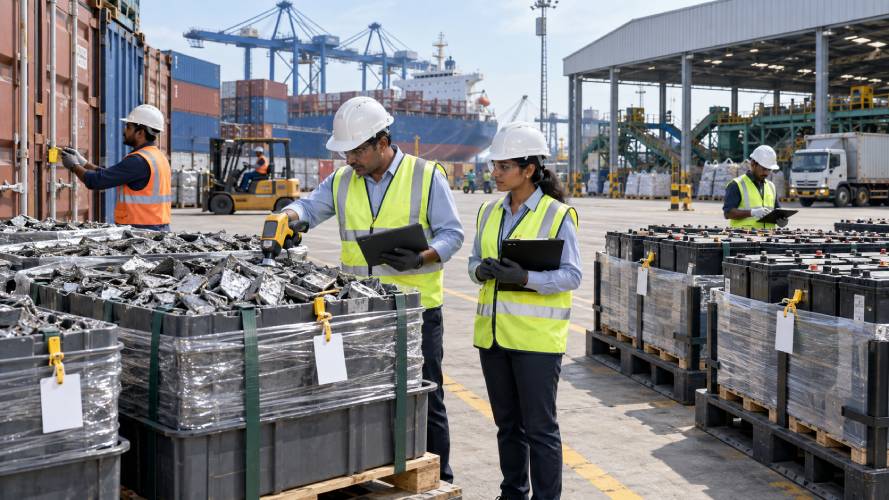
Lead-bearing scrap and used lead-acid batteries are regulated because improper transport, storage or recycling can expose workers and the environment to lead and acidic electrolyte. An importer must confirm the waste classification, operate an authorised recycling facility and obtain the permissions applicable to the consignment.
The compliance chain can involve the Ministry of Environment, Forest and Climate Change (MoEFCC), the Central Pollution Control Board (CPCB), the relevant State Pollution Control Board or Pollution Control Committee (SPCB/PCC), the Directorate General of Foreign Trade (DGFT) and Customs. These approvals have different purposes. One registration does not automatically replace another.
This guide explains the framework for lead scrap import in India, the documents expected from recyclers and the checks required before shipment.
Is the Import of Lead Scrap Allowed in India?
Lead scrap may be imported only when the relevant category is permitted under Indian hazardous-waste and foreign-trade rules and the importer meets the attached conditions. Several battery-waste and lead-scrap tariff lines are restricted under India’s import policy. A restricted item generally requires the applicable DGFT authorization in addition to environmental permission.
The correct route depends on what the shipment contains. Lead scrap may include clean metal scrap, battery plates or lugs, whole or drained used lead-acid batteries, residues or mixed material. ISRI trade descriptions such as RAINS, RINK, RAILS and RAKES do not remove the need to verify composition, contamination, electrolyte content, Basel classification and ITC (HS) code.
Complete this classification before signing a contract or dispatching cargo. If the invoice, analysis certificate and Customs declaration do not match the material, the consignment can face testing, rejection or enforcement.
Authorities Involved and What Each Approval Covers
- MoEFCC: Considers permission for eligible hazardous-waste imports under the Hazardous and Other Wastes (Management and Transboundary Movement) Rules, 2016, through the applicable appraisal process.
- CPCB: Administers technical requirements, SOPs and EPR systems and may assess the recycling facility.
- SPCB/PCC: Issues the Consent to Operate and hazardous-waste authorization.
- DGFT: Administers authorization for restricted imports under the ITC (HS) policy.
- Customs: Checks classification, consignments and permissions during clearance.
For used batteries, the Battery Waste Management Rules, 2022 and CPCB EPR portal may also apply. CPCB’s import SOP requires lead recycling units importing lead scrap or used lead-acid batteries to register on the battery EPR portal. See Gravita’s Battery Waste Management Rules guide.
Important regulatory reference: CPCB’s 2024 Standard Operating Procedure specifically addresses import of lead scrap and used lead-acid batteries for recycling. The July 2026 CPCB recycling guidelines should be read alongside the applicable earlier SOP and not as a replacement for the import-specific requirements.
Step-by-Step Compliance Route for Lead Scrap Import
1. Identify the exact waste and trade classification
Obtain a description and representative analysis. Confirm the applicable Basel entry and ITC (HS) code. Whole batteries, drained batteries and metallic lead scrap are not interchangeable.
2. Verify facility-level environmental approvals
The unit needs a valid Consent to Operate under the Water and Air Acts and authorization under the Hazardous and Other Wastes Rules. Its permitted material and capacity must support the import.
3. Check CPCB technical and EPR compliance
Lead recyclers must demonstrate suitable equipment, covered storage, pollution-control systems, effluent management and worker-safety measures. For imported used lead-acid battery scrap, CPCB’s SOP requires an automatic battery-breaking system with acoustic enclosure, dust and fume extraction, acid collection and neutralisation facilities, and ETP for lead and acidic wastewater.See Gravita’s guide to lead recycling plant capacity, technology and compliance.
4. Prepare and submit the MoEFCC application
The application package includes Form 5 and supporting documents under the hazardous-waste rules. Current filing procedures and document requirements should be checked before submission because they can change. The applicant must also provide the SPCB/PCC acknowledgement of the application copy where required.
5. Complete technical appraisal and any site verification
The Expert Committee may review capacity, production, domestic procurement, previous permissions and CPCB findings. It may seek more information or a site visit. Recent MoEFCC proceedings also show that an import quantity may be granted in stages subject to CPCB site-verification or compliance information.
6. Obtain the applicable DGFT authorization
Where the selected ITC (HS) line is restricted, the importer must meet DGFT requirements. Environmental permission and foreign-trade authorization are separate controls where both apply. The final documents should use the same material description, classification and quantity across the applicable processes.
7. Meet transboundary movement and Customs conditions
Some hazardous battery-waste movements require Prior Informed Consent from the exporting country and Basel Convention documentation. The invoice, packing list, bill of lading, analysis certificate and Customs declaration must align with the permissions obtained and shipment classification.
Documents Required for MoEFCC Permission
Based on recent MoEFCC import proceedings and the CPCB lead-scrap import SOP,, applicants should be prepared to submit the following records. The exact set can change or be supplemented during appraisal, so the latest Ministry checklist and permission conditions should be checked before filing.
- Completed Form 5 for import of hazardous and other waste.
- A clear justification for the proposed import.
- Valid Consent to Operate under the Water and Air Acts and hazardous-waste authorization.
- Analysis reports covering stack emissions, wastewater, ambient air, work-zone environment, soil and groundwater, particularly for lead, along with the latest worker blood-lead analysis from an appropriately accredited laboratory, as required by the applicable checklist/SOP.
- A process flow chart, pollution-control details, plant photographs and operating video.
- For imports of used lead-acid battery scrap, details of the automatic battery-breaking system, including acoustic enclosure, dust and fume extraction, acid collection and neutralisation, and ETP arrangements.
- An acknowledgement from the SPCB/PCC confirming receipt of the application copy.
- Information on employment generated by the unit.
- Previous MoEFCC permissions, extensions, imported quantities and users supplied, where applicable.
- Actual production for the preceding financial year, supported by a chartered accountant’s certificate.
- Establishment and operating dates with evidence.
- CA-certified export, sales and GST information requested by the checklist.
- Valid EPR registration certificate under the Battery Waste Management Rules, 2022.
Check all validity dates, quantities and facility details. Conflicting figures or plant evidence can delay appraisal.
CPCB Compliance Expected at a Lead Recycling Facility
For imported lead scrap and used lead-acid batteries, CPCB’s SOP sets facility and handling requirements including valid CTO and hazardous-waste authorization, EPR registration, covered and acid-proof storage, pollution-control systems, automatic battery breaking for imported used batteries, acid collection and neutralisation, ETP, hazardous-waste storage and worker lead monitoring.Facilities also need appropriate PPE, hygiene controls, medical surveillance and continuing records.
See Gravita’s lead battery recycling capabilities for more on controlled material recovery.
Special Conditions for Used Lead-Acid Battery Scrap
Used lead-acid batteries may fall under Basel entry A1160, depending on their condition and composition. Prior Informed Consent and shipment-specific conditions may then apply. Recent MoEFCC decisions have imposed electrolyte limits on certain RAINS consignments. Always follow the exact permission issued for the shipment.
Battery scrap should be packaged to prevent leakage, short circuits, breakage and mixing with undeclared waste. CPCB’s SOP specifies acid-resistant, shock-resistant sealed containers for RINK/RAINS batteries and requirements for secure loading and leakage prevention. Review the supplier’s description and inspection records before loading. Also see Gravita’s guide for battery scrap sellers.
How Is the Permitted Import Quantity Decided?
The appraisal may examine authorised capacity, actual production, domestic procurement, material balance, previous import utilisation, compliance and site-inspection findings. For a new or expanded unit, permission may be conditional or staged until operating capability is verified.
Applicants should therefore ensure that the quantity requested can be supported by production data, authorised capacity, domestic procurement and a realistic material balance.
Common Reasons for Delay or Non-Compliance
- Using a generic description such as “metal scrap” without confirming composition and waste classification.
- Selecting an incorrect ITC (HS) code or using different codes across applications and shipping documents.
- Submitting expired or inconsistent CTO, hazardous-waste authorization or EPR registration records.
- Requesting a quantity that is not supported by actual production and authorised capacity.
- Providing incomplete plant photographs, process flow or pollution-control details.
- Dispatching cargo before all applicable environmental, trade and transboundary-movement conditions are satisfied.
- Accepting a consignment with excessive electrolyte, mixed waste or contamination not covered by the permission.
- Failing to keep auditable records of receipt, processing, recovery, residues and downstream movement.
Before buying, conduct supplier due diligence and define scrap specifications, sampling, rejection, packaging and documentary responsibility. Explore Gravita’s recycling insights or contact the team.
Frequently Asked Questions
Is MoEFCC permission mandatory for importing lead scrap?
Lead scrap and battery scrap covered by the permission route require approval before import. Confirm the exact classification and applicable permissions for the proposed material.
Does CPCB registration alone allow a company to import battery scrap?
No. CPCB EPR registration or compliance with a CPCB SOP does not replace MoEFCC permission, SPCB/PCC consents, DGFT authorization or Customs requirements where those controls apply.
Is a DGFT import authorization also required?
Yes, when the applicable ITC (HS) policy classifies the item as restricted. Lead waste and scrap under ITC (HS) 7802 is currently listed as Free, so the DGFT requirement depends on the actual classification and current import policy. Verify the current policy before shipment.
What is the difference between B1020 and A1160?
These are Basel Convention entries used for different waste streams. B1020 covers specified non-ferrous metal scrap in non-dispersible form, subject to its definition, while A1160 covers waste lead-acid batteries, whole or crushed. Classification must follow the shipment’s actual characteristics, not its commercial label alone.
How long does lead scrap import approval take?
There is no universal timeline. It depends on completeness, committee schedules, site verification, PIC and the DGFT process where applicable. Do not assume approval by a fixed date.
Conclusion
For Gravita, this compliance-led approach extends across the battery value chain. Through its Back2Recycle initiative, Gravita works toward an integrated end-of-life battery journey covering collection, safe transportation, responsible recycling and recovery, helping direct batteries into formal recycling channels.
Lead scrap import in India requires more than a purchase order and an overseas supplier. A defensible import programme begins with accurate waste classification and continues through valid facility approvals, MoEFCC permission, CPCB and EPR compliance, DGFT authorization where applicable, shipment controls and complete operating records.
Verify every condition against the latest official rules, checklist and permission letter before loading. A traceable supply chain reduces disruption while returning lead to productive use through formal recycling.
Regulatory note: This article provides general information and is not legal advice. Import policy, portal procedures, checklists and permission conditions may change. Applicants should confirm current requirements with MoEFCC, CPCB, the relevant SPCB/PCC, DGFT and Customs for the specific material and shipment.