


 Share
Share
Aluminium Recycling Plant Setup: Process, Machinery, Capacity and Turnkey Project Planning
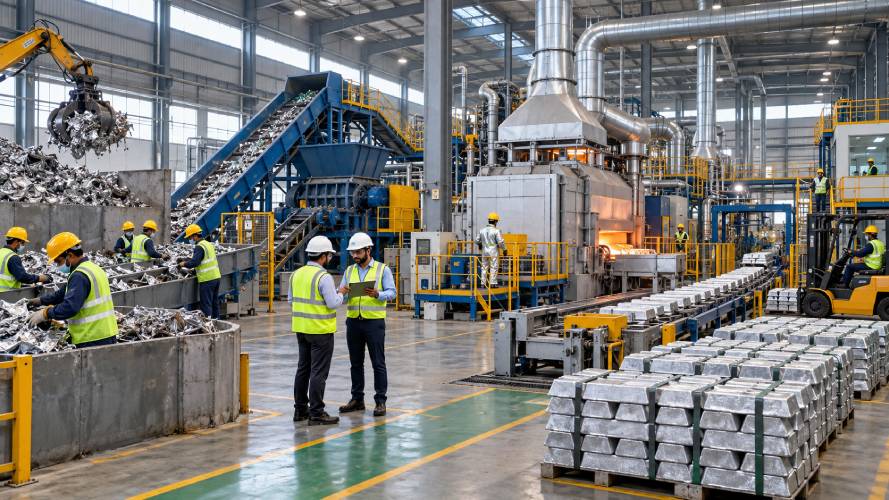
An aluminium recycling plant cannot be planned around furnace capacity alone. Feedstock quality, alloy segregation, metal recovery, energy use, emission control, casting format and product demand all influence plant design, operating performance and project economics.
A sound aluminium recycling plant setup begins with three decisions: which scrap will enter the plant, which products will leave it and how much saleable metal must be produced. Machinery and plant layout should follow these decisions, not precede them.
This guide explains the process route, essential equipment, capacity calculations and turnkey planning points for businesses evaluating a new facility or plant expansion.
Define the Feedstock and Finished Product First
Aluminium scrap varies widely. Clean extrusion scrap, used beverage cans, cast automotive parts, turnings, mixed sheet, foil and coated scrap have different bulk density, contamination, alloy chemistry and melting loss. A plant designed for clean industrial offcuts will not necessarily handle oily turnings or coated packaging efficiently.
Before equipment selection, prepare a feedstock study covering:
- Expected scrap categories, monthly availability and supplier locations.
- Moisture, oil, paint, iron, plastic and other contamination.
- Alloy mix and the level of segregation possible before melting.
- Bulk density, piece size and packaging form.
- Expected metal recovery and dross generation.
- Target output, such as alloy ingots, deoxidant, billets or molten metal.
Gravita’s aluminium scrap procurement page provides context on the range of secondary aluminium feedstock handled within formal recycling channels.
Aluminium Recycling Process
1. Receipt, inspection and sorting
Incoming scrap is weighed, inspected and assigned a lot number. Sorting separates aluminium by alloy family and removes iron, copper, plastic, rubber and other unwanted material. Depending on the feedstock, the plant may use manual sorting, magnets, eddy-current separation, screening or sensor-based systems.
2. Size reduction and preparation
Bulky scrap may be baled, sheared, crushed or shredded to improve handling and furnace charging. Turnings may require crushing, centrifuging and drying. Coated or painted scrap can require thermal decoating before melting. Preparation reduces contamination and improves charge density, but every added step must be justified by recovery and throughput.
3. Melting
Prepared scrap is charged into a suitable furnace. Furnace choice depends on scrap cleanliness, size, oxide content, desired output and fuel availability. Rotary furnaces can handle contaminated or mixed material, while reverberatory, side-well, crucible and other furnace designs suit different production routes. The correct choice is an engineering decision, not a universal preference.
4. Treatment, alloying and quality control
Molten metal is skimmed and may be treated to control dissolved gases and non-metallic inclusions. Fluxing, degassing and filtration may be used according to the target grade. Alloying elements are then added under controlled conditions. A spectrometer or suitable laboratory method verifies chemistry before casting.
5. Casting and finishing
The approved melt is cast into the required form, commonly ingots or other customer-specific shapes. Finished material is cooled, weighed, marked, bundled and linked to its production batch and certificate of analysis. Gravita’s aluminium alloy manufacturing page shows the commercial context for recycled alloy products.
6. Dross and residue management
Dross can retain recoverable aluminium. Dross presses, coolers or specialised recovery systems may improve recovery and reduce oxidation. Remaining residues must be characterised, stored appropriately and managed through authorised channels in accordance with applicable regulatory requirements.
Machinery Required for an Aluminium Recycling Plant
The final equipment list depends on the feedstock and product route, but a complete plant may include:
- Weighbridge, receiving bays and covered scrap storage.
- Sorting conveyors, magnets, eddy-current separators and inspection stations.
- Balers, shears, crushers or shredders.
- Chip crusher, centrifuge and dryer for oily turnings.
- Decoating or delacquering system for coated scrap.
- Charging machines and material-handling equipment.
- Melting and holding furnaces with burners and temperature controls.
- Fluxing, degassing, filtration and alloy-addition systems.
- Spectrometer, sample-preparation tools and laboratory equipment.
- Ingot moulds, casting conveyor, cooling, stacking and weighing systems.
- Dross press, cooler or metal-recovery equipment.
- Fume extraction, ducting, baghouse and other pollution-control systems.
A lower equipment purchase price does not necessarily result in a lower-cost plant. Missing preparation, laboratory or emission-control systems can affect recovery, product consistency and future retrofit costs.
How to Calculate the Right Plant Capacity
Plant capacity should be based on saleable output, not only the furnace’s nominal tonnes per batch. A realistic calculation considers:
- Scrap available per month and expected supply variation.
- Metal recovery for each scrap category.
- Furnace cycle time, batches per day and operating shifts.
- Planned uptime, maintenance and changeover losses.
- Sorting, preparation, holding and casting bottlenecks.
- Customer demand by alloy and finished-product format.
For example, 100 tonnes of mixed input does not produce 100 tonnes of saleable alloy. Non-metal contamination, oxidation, dross, process loss and off-specification metal reduce output. Capacity models should use feedstock-specific recovery assumptions supported by trials or credible operating data.
The furnace, preparation line, pollution-control system, laboratory and casting line must be balanced. Oversizing one section simply moves the bottleneck elsewhere.
Utilities and Infrastructure Planning
The project team should calculate connected load and operating consumption for fuel, electricity, compressed air, process water and cooling. The layout must include safe traffic movement, scrap quarantine, covered storage, furnace charging, molten-metal transfer, finished-goods storage, laboratory access and emergency routes.
Other essential provisions include fire protection, ventilation, refractory maintenance areas, drainage, worker facilities, spare storage and space for future expansion. Utility interruptions and poor material flow can erase gains promised by efficient process equipment.
Environmental and Regulatory Planning
Approval requirements depend on plant location, capacity, process and scrap classification. In India, a project may need Consent to Establish and Consent to Operate from the relevant SPCB/PCC, along with factory, fire, electrical, building and hazardous-waste permissions where applicable. Environmental clearance and other approvals must be checked against current central and state requirements.
The design should address furnace fumes, dust, combustion gases, dross, salt-bearing residues, wastewater, stormwater, noise and worker exposure. Pollution-control systems should be incorporated during process and plant design rather than added after the production line has been finalised. Ducting, hood design, air volume and residue handling must be engineered with the process.
Turnkey Aluminium Recycling Project Planning
A turnkey partner can coordinate process design, plant layout, equipment engineering, fabrication, supply, installation, commissioning and training. Gravita’s turnkey aluminium recycling solutions cover this integrated project approach.
Before appointing a vendor, define the scope boundary clearly. The proposal should state who is responsible for civil works, utilities, foundations, electrical panels, interconnections, pollution control, laboratory equipment, commissioning consumables, permits and operator training.
Performance guarantees should be measurable and tied to agreed feedstock. Important parameters include throughput, metal recovery, fuel or energy consumption, product chemistry, emissions, manpower and availability. A guarantee based on clean scrap cannot be applied blindly to heavily contaminated material.
Recommended project stages
- Feasibility: feedstock, product, market, site, utilities and financial model.
- Basic engineering: process flow, mass balance, capacity and layout.
- Detailed engineering: foundations, utilities, controls, safety and environmental systems.
- Manufacturing and inspection: drawings, quality plans and factory acceptance checks.
- Installation and commissioning: cold trials, hot trials and performance testing.
- Handover: manuals, spares, training, test records and acceptance documentation.
For a wider view of project delivery, see Gravita’s article on turnkey solutions in recycling.
Key Cost and Profitability Drivers
Capital cost depends on plant capacity, feedstock preparation, furnace technology, automation, pollution control, casting format, laboratory facilities and local infrastructure. Operating economics are driven by scrap purchase price, metal recovery, alloy premium, energy consumption, flux and refractory use, labour, maintenance, finance and residue disposal.
A feasibility model should test changes in scrap price, product price, recovery and utilisation. A small improvement in metal yield can matter more than a modest reduction in equipment price because lost aluminium affects every production cycle.
Common Planning Mistakes
- Buying a furnace before confirming scrap type and finished-product demand.
- Using nameplate furnace capacity as the plant’s saleable output.
- Ignoring scrap preparation and alloy segregation.
- Underestimating laboratory, pollution-control and residue-management needs.
- Accepting performance guarantees without defined feedstock conditions.
- Leaving civil works, utilities or interconnections outside every vendor’s scope.
- Starting construction before approvals and layout reviews are complete.
Frequently Asked Questions
Which furnace is best for aluminium recycling?
No furnace is best for every plant. Selection depends on scrap cleanliness, size, oxide content, fuel, target product, recovery and required throughput.
Can mixed aluminium scrap be processed together?
It can be melted, but uncontrolled mixing makes alloy chemistry and product value harder to manage. Sorting by alloy family usually improves consistency.
What information is needed before requesting a turnkey quotation?
Provide scrap types and analysis, monthly availability, target products and grades, required output, site details, utilities, automation preference and applicable environmental requirements.
How long does an aluminium recycling plant take to commission?
There is no universal timeline. It depends on capacity, engineering complexity, approvals, civil readiness, equipment lead time and commissioning conditions.
Conclusion
A successful aluminium recycling plant is a balanced production system, not a collection of machines. Feedstock analysis determines the process; the process determines the equipment; and realistic recovery determines the true capacity and economics.
Businesses planning a new plant or expansion should complete feasibility and basic engineering before ordering equipment. To discuss process design, machinery and project execution, contact Gravita India with the proposed feedstock, output and site requirements.
Project note: Equipment selection, recovery, emissions and approval requirements vary by feedstock, location and product specification. Final decisions should be based on site-specific engineering and current regulatory requirements.